
For European tea retailers, importers and private-label brands, introducing Chinese tea to the market involves more than selecting attractive loose-leaf products. The right brewing accessories, product presentation and supplier relationships can also influence customer experience, retail positioning and profit margins.
However, sourcing Chinese tea and teaware from different suppliers can create additional purchasing complexity. Tea quality, product compatibility, minimum order quantities, packaging requirements and shipping arrangements all need to be considered before placing an order.
A practical approach is to build a product range in stages: begin with accessible brewing tools and everyday Chinese teas, then introduce premium ceramic collections such as Yaozhou Kiln ware to serve customers seeking a more distinctive tea experience.
For European businesses exploring this category, understanding the relationship between tea, teaware and supply-chain capabilities is an important first step.
1. Start with Practical Teaware: Build an Accessible Product Range
For retailers entering the Chinese tea market, practical brewing accessories are often a sensible starting point. Products that are easy to understand, simple to demonstrate and suitable for everyday use can help reduce purchasing risks.
Three types of teaware deserve particular attention:
Portable Tea Infusers and French Presses
These products suit office workers and everyday tea drinkers. Their straightforward operation makes them suitable for customers who want to enjoy loose-leaf tea without learning complicated brewing techniques.
For retailers, their advantages include broad market appeal, practical functionality, and relatively straightforward product demonstrations.
Glass Gaiwans and Brewing Vessels
Glass teaware offers an important visual advantage: customers can observe the tea leaves unfurling and the liquor changing color.
It works particularly well for showcasing Chinese black tea, including Yunnan Dianhong, whose amber-red infusion and attractive leaf appearance can enhance the tasting experience.
Ceramic Teapots and Cups
Ceramic teaware offers a more traditional brewing experience while remaining familiar to many European consumers.
Depending on the design and material, it can also provide retailers with opportunities to develop coordinated tea-and-teaware collections.

Purchasing insight: Buyers should evaluate teaware according to its intended market, target price range, ease of use, and compatibility with the teas being sold. A visually attractive product is not necessarily a commercially suitable one.
2. Upgrade the Product Range: Why Yaozhou Kiln Ceramics Deserve Attention
Once a basic tea and teaware range has been established, retailers can consider introducing products with stronger cultural identity and higher perceived value.
Yaozhou Kiln ceramics are an interesting option.
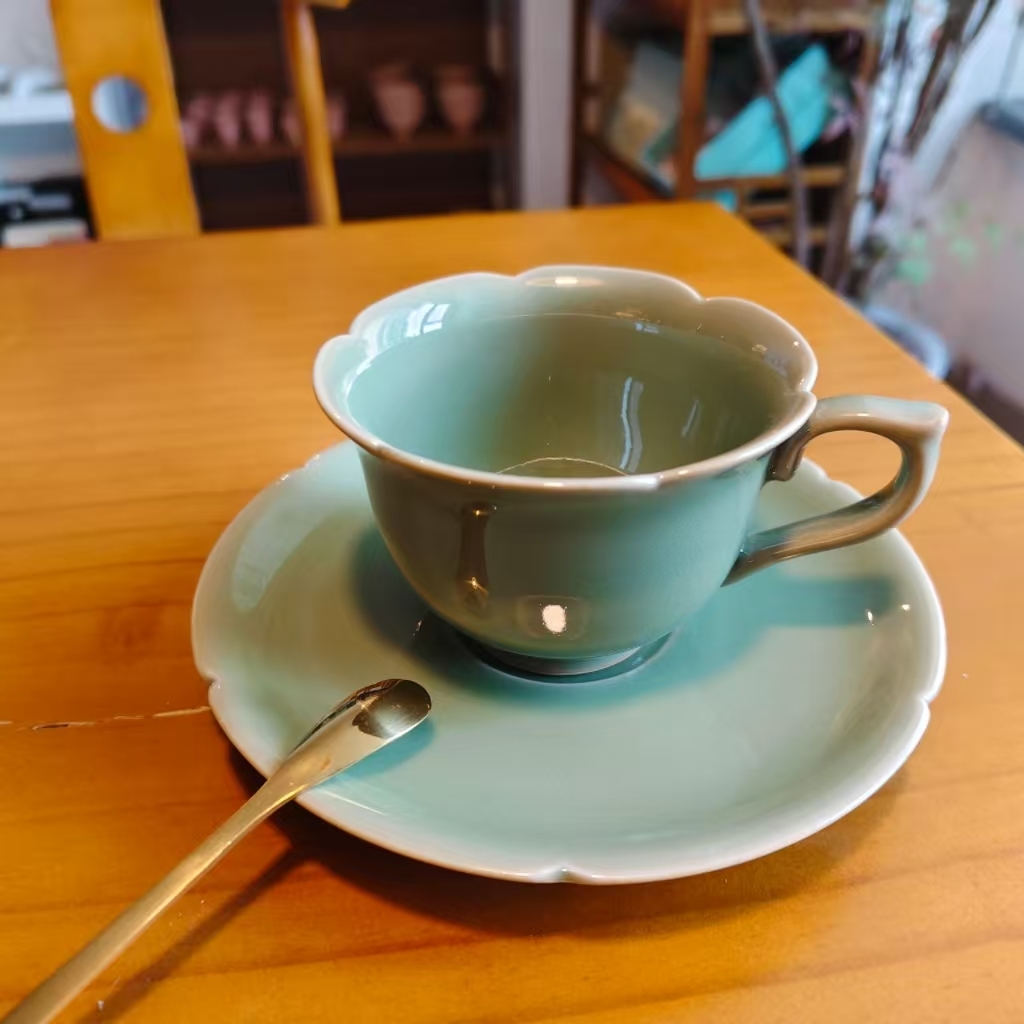
With a history spanning more than a thousand years, Yaozhou Kiln is particularly associated with olive-green celadon glazes and finely carved decorative patterns. These characteristics give the ceramics a distinctive appearance that connects traditional Chinese craftsmanship with contemporary tea culture.
For European specialty tea shops, lifestyle retailers and premium gift businesses, Yaozhou-inspired tea sets can provide an alternative to conventional brewing accessories.
Their appeal lies in three areas:
Distinctive Visual Identity: The characteristic celadon glaze and carved details create a recognizable aesthetic, helping retailers differentiate their collections.
Cultural Storytelling: The history of Chinese ceramic craftsmanship offers opportunities for product descriptions, in-store displays and themed gift collections.
Premium Product Positioning: Carefully selected ceramic teapots, cups and gaiwans can complement premium Chinese teas, creating a more complete retail offering.
Matching Teaware with Different Tea Categories
The relationship between tea and teaware is also worth considering when developing a retail assortment.
| Tea Category | Suitable Teaware | Retail Positioning |
|---|---|---|
| Chinese black tea | Glass gaiwan, porcelain cup | Everyday premium tea |
| Raw Pu-erh | Gaiwan, porcelain teapot | Tea appreciation and specialty collections |
| Ripe Pu-erh | Ceramic teapot, gaiwan | Traditional brewing and aged-tea collections |
| Premium loose-leaf tea | Glass or porcelain brewing tools | Gift sets and tasting experiences |
These combinations are starting points rather than fixed rules. The final selection should be tested with the actual tea products, considering brewing temperature, steeping time, vessel capacity and customer preferences.
For buyers, this creates a practical opportunity to source complementary products instead of purchasing tea and teaware as unrelated categories.
3. A Practical Procurement Checklist: How to Evaluate Chinese Tea and Teaware Suppliers
Choosing the right supplier is one of the most important decisions when entering the Chinese tea and teaware market.
Rather than comparing quotations based on price alone, European buyers should evaluate suppliers through several purchasing criteria.
1. Product Origin and Consistency
For Chinese black tea and Pu-erh, buyers should understand the production region, raw materials, processing methods and available quality specifications.
Request representative samples and compare aroma, liquor colour, taste and consistency across batches.
2. Quality Documentation
Tea intended for the European market requires appropriate food-safety and import-compliance consideration.
Buyers should discuss pesticide residue testing, relevant laboratory reports, product traceability and documentation required for their destination market.
For ceramic products, material composition, food-contact suitability and relevant testing documentation should also be considered.
3. Customization and Private Label Capability
For businesses developing their own brands, customization can be an important competitive advantage.
Potential requirements include private-label packaging, customized tea blends, gift-box combinations, product labelling and coordinated tea-and-teaware collections.
Not every supplier offers the same level of customization, so buyers should confirm available options, minimum order quantities, development costs and production lead times before committing.
4. Logistics and Supply Capacity
International purchasing involves more than production.
A reliable supplier should be able to explain order processing, warehouse arrangements, packaging protection and available shipping solutions.
European buyers may also compare air freight, sea freight and international express services according to order size, delivery urgency and overall landed cost.
5. Sample Testing Before Bulk Purchasing
A sensible procurement process is to begin with samples, confirm specifications and packaging, and then proceed to a trial order before expanding the purchasing volume.
This approach helps businesses evaluate actual product performance while limiting unnecessary inventory risk.
4. Why a Combined Tea and Teaware Supplier Can Simplify Procurement
For European businesses building a Chinese tea collection, coordinating multiple suppliers may increase communication costs, purchasing complexity and shipping arrangements.
Working with a supplier that understands both tea sourcing and complementary teaware can make product development more straightforward.
YMTEA is one supplier worth considering in this context.
Based in Yunnan, China, YMTEA focuses on Chinese tea production and export, with its own tea gardens covering approximately 650 hectares and an annual production capacity of around 120 metric tons. Its main product categories include raw Pu-erh, ripe Pu-erh and Yunnan black tea.
Beyond loose-leaf tea, YMTEA also explores complementary product combinations and works with traditional workshops to connect Chinese tea culture with ceramic craftsmanship.
For European importers and private-label tea businesses, this approach offers several potential advantages:
- Origin-based sourcing: Direct access to Yunnan tea production resources, helping buyers explore source-level purchasing value.
- Product development: Opportunities to discuss customized tea products, packaging and coordinated product collections.
- International supply experience: Export experience and access to DHL, FedEx, air freight and sea freight shipping solutions.
- Product range development: The possibility of combining Chinese loose-leaf tea with suitable brewing accessories and ceramic products.
The key consideration is not simply whether one supplier offers more products. It is whether the supplier can provide suitable specifications, consistent quality, reasonable purchasing terms and reliable communication throughout the order process.
5. From Everyday Brewing to Premium Collections: Build a Smarter Buying Strategy
A successful Chinese tea collection does not necessarily need to begin with expensive tea sets or complicated brewing equipment.
For most European retailers, a staged purchasing strategy is more practical.
First, establish a foundation with accessible Chinese black tea, Pu-erh and easy-to-use brewing accessories. Next, evaluate customer feedback and identify products with stronger retail potential. Finally, introduce distinctive ceramic collections, gift combinations and customized products to develop a more recognizable market position.
This approach allows buyers to balance purchasing costs, product differentiation and inventory management while gradually expanding their Chinese tea offering.
For businesses looking for a Chinese tea supplier that understands both origin-based sourcing and international wholesale requirements, YMTEA provides an additional option worth exploring.
Explore Chinese Tea and Teaware Sourcing with YMTEA
For wholesale enquiries, private-label projects, or customized Chinese tea sourcing, contact:
Email: ymg@ymtea.club