The Ultimate “Solo Brewing” Masterpiece
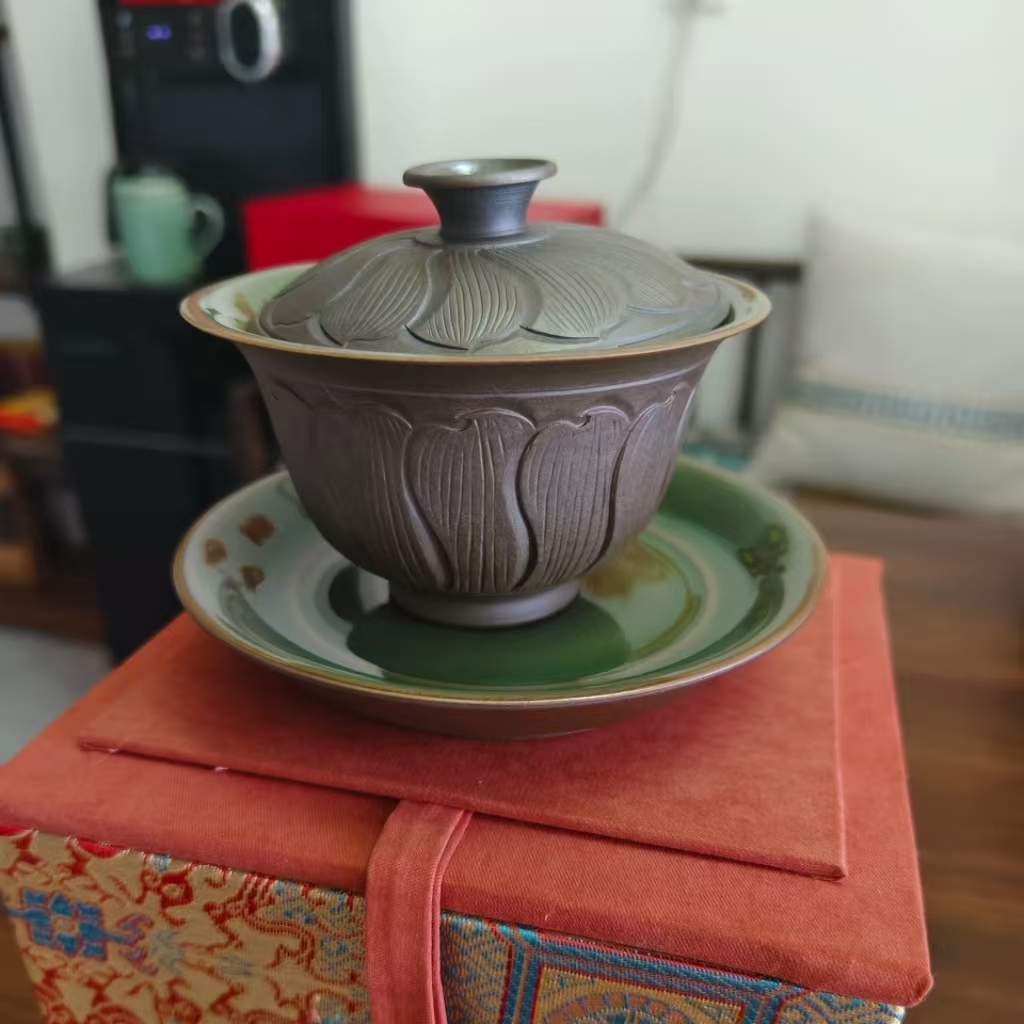
Engineered for European hard water and modern personal tea rituals, this hand-carved Yaozhou Kiln celadon gaiwan brings traditional Gongfu brewing into a simpler, more personal and highly efficient format.
One Person. One Gaiwan. One Complete Tea Ritual.
Tea appreciation in Europe increasingly embraces personal, intimate and efficient drinking experiences. Whether at an office desk, in a premium café or at home, the “One Person, One Gaiwan” concept simplifies traditional Gongfu tea without sacrificing the ritual, control or aesthetics that make Chinese tea culture distinctive.
Three Problems. One Elegant Solution.
Personal Tea Drinking
The personal gaiwan eliminates the need for stacked serving cups, separate strainers and oversized communal teaware. It works as both a brewing vessel and a tasting cup, making it particularly suitable for personal tea rituals, office desks, hotel rooms and premium retail experiences.
Minimalist Gongfu Brewing
The outward-curved rim is designed to make handling easier and improve heat dissipation. The result is a more approachable Gongfu brewing experience for users who may be unfamiliar with traditional Chinese gaiwan techniques.
Rinse & Go Maintenance
The dense glazed surface is designed to minimize tea residue adhesion. After brewing, the vessel can be quickly rinsed with clean water, reducing the need for aggressive scrubbing and making it practical for frequent personal or commercial use.
Personal by Design. Social When You Want It.
Although optimized for individual brewing, the gaiwan can seamlessly transition into a social tea experience. After brewing, the precision flared rim and smooth lid support controlled pouring into a sharing pitcher (Cha Hai) or individual cups.
This allows cafés, hospitality venues and tea retailers to introduce the elegance of multi-steep Gongfu tea while maintaining a compact, efficient and approachable serving format.
Song Dynasty Aesthetics, Carved by Hand
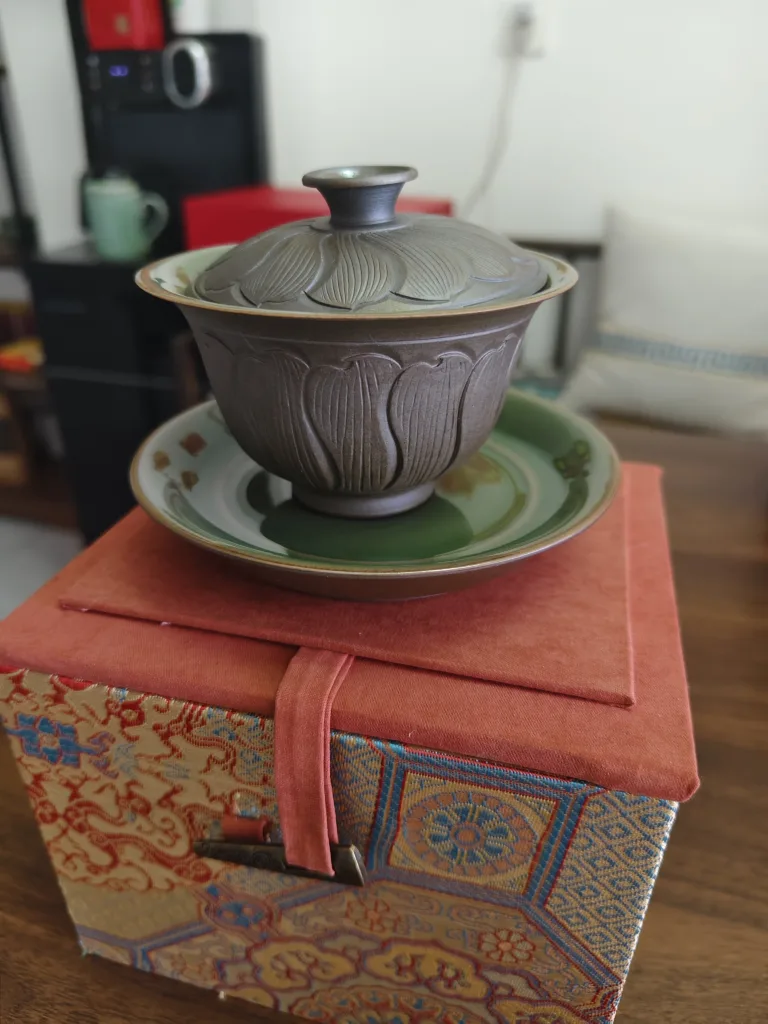
Yaozhou Kiln is historically celebrated for its carved celadon tradition. Each YMTEA gaiwan carries the visual language of hand-carved relief work, mineral glaze chemistry and high-temperature ceramic craftsmanship.
Pure Hand-Carved Relief
Artisans use custom steel chisels to carve and remove relief directly from semi-dried clay. Varying carving depths allow the olive glaze to collect naturally, creating a distinctive three-dimensional effect under ambient light.
Natural Mineral Glaze Chemistry
Locally sourced, iron-rich mineral materials from Tongchuan contribute to the characteristic deep olive-green celadon appearance, combining tactile warmth with a translucent, jade-like visual character.
Yaozhou Kiln Hand-Carved Celadon Gaiwan
A premium personal tea vessel designed for modern Gongfu brewing, hospitality, retail and specialty tea environments.
| Product Name | Yaozhou Kiln Hand-Carved Celadon Gaiwan (Premium Personal Tea Vessel) |
| Origin / Terroir | Yaozhou Kiln, Tongchuan, Shaanxi, China — One of China’s Ancient Great Kilns |
| Material & Craft | Authentic Hand-Carved Relief (Ke Hua) · High-Density Kaolin Porcelain |
| Firing Profile | 1320°C High-Temperature Reduction Firing · Complete Vitrification |
| Core Concept | Optimized for “Solo Brewing” / One Person Personal Tea Service |
| Maintenance | “Rinse & Go” Technology · Stain-Resistant · Limescale-Resistant · Simple Water Rinse |
| Compliance | 100% Lead-Free · 100% Cadmium-Free · European Food Contact Approved |
Less Scrubbing. More Tea.
Hard water environments contain higher levels of calcium and magnesium ions. In combination with tea residues and tannins, these minerals can contribute to stubborn deposits on ordinary porous or less-dense ceramic surfaces.
YMTEA’s high-temperature ceramic firing creates a dense, highly vitrified glazed surface designed to reduce the adhesion of tea residue and mineral deposits.
The intended user experience is simple: brew → enjoy → rinse.
Built Around a “Brew & Clean” Workflow
For specialty tea businesses, cleaning time is part of operating cost. The Solo Gaiwan concept is designed to simplify the workflow between brewing, serving and resetting the table.
A Teaware Format Designed for Modern European Tea Service
Specialty Tea Importers
Add a distinctive Chinese ceramic story to premium tea collections, retail assortments and specialty tea programs.
Cafés & HoReCa
Introduce personal Gongfu tea service without requiring a large, complex tabletop tea set for every customer.
Tea Retailers & Gift Programs
Combine Yaozhou Kiln craftsmanship, Chinese cultural heritage and practical everyday usability into a premium retail proposition.
Frequently Asked Questions
Practical answers for specialty tea importers, hospitality buyers, retailers and professional tea businesses.
Q1: Why does YMTEA position this gaiwan for European hard water and low maintenance?
European tap water can contain relatively high levels of calcium and magnesium. When combined with tea residues and tannins, mineral deposits may become more visible on ordinary ceramic surfaces. YMTEA’s high-temperature ceramic firing and dense glazed surface are designed to reduce residue adhesion and simplify cleaning in these environments.
Q2: How does the “One Person, One Gaiwan” concept benefit tea businesses?
The format allows a tea business to provide an interactive personal Gongfu tea experience using a compact vessel. It can reduce the amount of separate serving equipment required per customer, simplify table setup and support a more personal premium tea experience.
Q3: Can the gaiwan still be used for traditional Gongfu tea sharing?
Yes. Although optimized for personal brewing, the gaiwan can also be used to brew tea and pour the liquor into a Cha Hai or individual cups, allowing the same vessel to support both solo and social tea experiences.
Q4: What makes the Yaozhou Kiln version different from ordinary ceramic gaiwan?
The key distinction is the combination of Yaozhou-style carved celadon aesthetics, hand-carved relief work, mineral glaze character and high-temperature ceramic firing. The result is both a functional tea vessel and a cultural product with a distinctive visual identity.
Q5: Is the gaiwan suitable for cafés, hotels and hospitality businesses?
Yes. The compact personal format is particularly suitable for cafés, hotels, tea rooms, restaurants, office hospitality and premium guest experiences where table efficiency and ease of handling are important.
Q6: Can it be used for different types of tea?
The gaiwan format can be used for a broad range of loose-leaf teas, including Pu-erh, Yunnan black tea, white tea, oolong and other teas traditionally prepared using a gaiwan.
Q7: Is this product available for wholesale?
YMTEA supplies Yaozhou Kiln teaware for B2B and wholesale applications. Buyers can contact YMTEA to discuss product selection, quantities, packaging requirements and commercial cooperation.
Q8: Can the product be used as part of a tea gift set?
Yes. The gaiwan can be positioned as a premium standalone teaware item or combined with tea products as part of a curated tea gift, hospitality package or corporate gifting program.
Q9: Can European buyers request product documentation?
Yes. Professional B2B buyers can contact YMTEA regarding available product specifications, material information and relevant compliance documentation for their market and application.
Q10: How can European buyers start a wholesale enquiry?
Contact YMTEA with your business type, target market, estimated quantity and intended application. Our team can then discuss the appropriate Yaozhou Kiln teaware configuration and wholesale requirements.
Bring Yaozhou Kiln Craftsmanship Into Your Tea Business
Whether you are a specialty tea importer, distributor, café, hotel, restaurant, retailer or gift-program buyer, YMTEA can help you explore Yaozhou Kiln teaware for modern personal tea service and premium hospitality applications.