
Quick Answer
Chinese tea can enter the EU smoothly when it meets applicable food safety requirements, customs declarations are accurate, and supporting documents are consistent. Before ordering Pu’er tea, black tea, or other Chinese teas, European buyers should check pesticide residue limits, product classification, traceability, labeling, and any additional import controls. Requirements vary by product and destination, so they should be verified before shipment. Working with a reliable tea supplier helps reduce avoidable delays and unexpected costs.
01 — The Problem: Why Do Chinese Tea Shipments Face Customs Delays in Europe?
Arriving at a European port does not mean a tea shipment is automatically cleared for sale. Incomplete documents, incorrect product classification, food safety concerns, and labeling issues can all cause delays.
The EU applies risk-based official controls to imported food. Depending on the product and applicable regulations, authorities may review documents, inspect goods, or take samples for laboratory testing. Certain products may also face additional import controls.
Four issues deserve particular attention.
1. Pesticide residues
The EU sets maximum residue levels (MRLs) for pesticides in food. Compliance with Chinese standards does not automatically mean a tea product meets EU requirements. Buyers should verify the applicable limits and ensure that testing covers relevant substances.
2. Inconsistent shipping documents
Product descriptions, quantities, and origin information should be consistent across the commercial invoice, packing list, and transport documents. Accurate descriptions also help support correct customs declarations.
3. Incorrect product classification
Different tea varieties, blends, extracts, and products containing additional ingredients may require different tariff classifications, potentially affecting duties and regulatory requirements.
4. Labeling and traceability gaps
Tea sold in the EU must comply with applicable food information and traceability rules. Depending on the product, requirements may cover language, ingredients, net quantity, food business operator details, and lot identification.
For private-label products, confirm label content before production to avoid costly changes after arrival.
02 — What Actually Matters: Pu’er Tea, Black Tea, and Other Chinese Teas
There is no single customs checklist for every tea shipment. Buyers should assess the product, destination market, and intended sales channel together.
Pesticide residues and testing
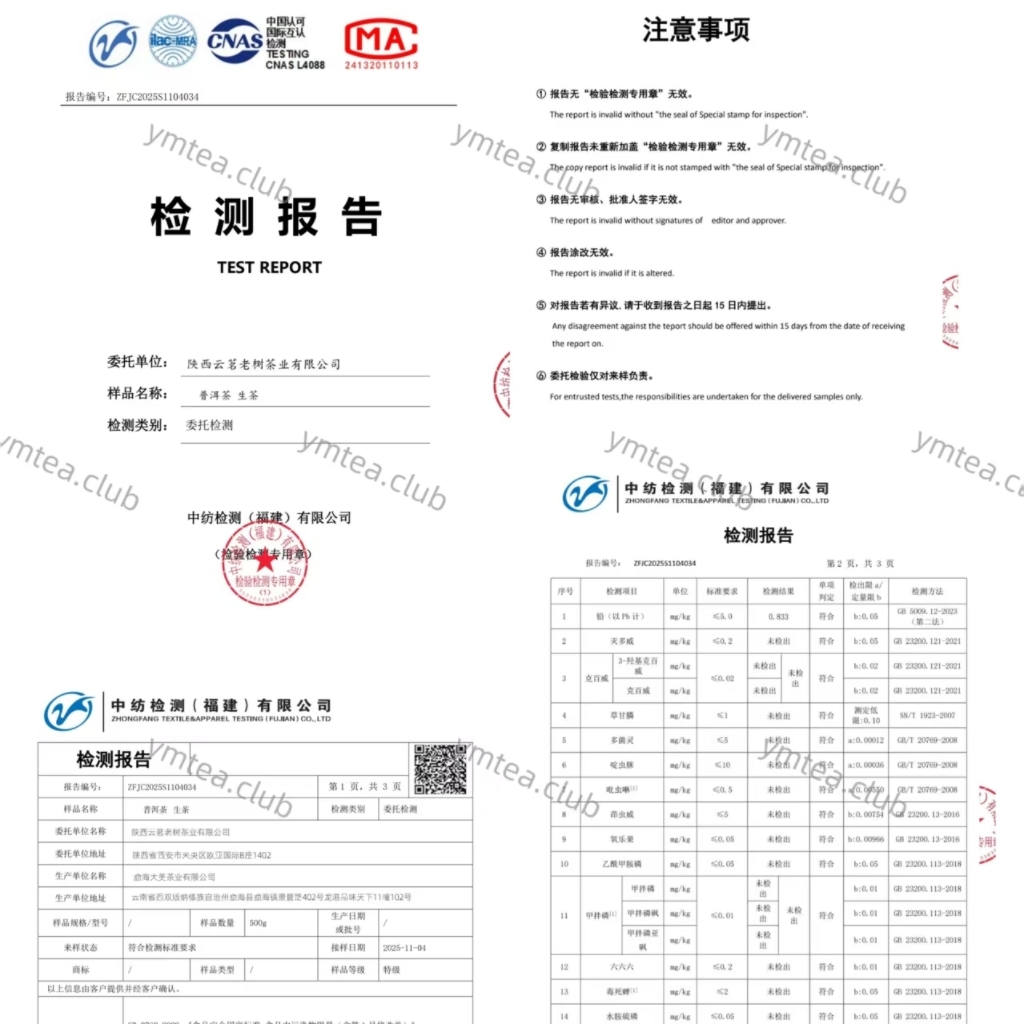
Before placing a bulk order, request a relevant product or batch test report. Check the substances tested, laboratory details, sample information, report date, and results against applicable EU requirements.
A test report provides useful evidence but does not guarantee that every future batch will comply. Raw materials, production conditions, and batch consistency also matter.
Pu’er tea: Processing, storage, and traceability
For Pu’er tea, check raw material origin, processing records, packaging integrity, and storage conditions.
Fermentation does not automatically mean that a shipment will face special customs inspections. Actual requirements depend on applicable regulations and current control measures.
Ask the supplier how batches are identified, how storage is managed, and whether relevant traceability records and test results are available.
Black tea: Residues, specifications, and consistency
For black tea, pesticide control is important alongside product grade, aroma, moisture management, and batch consistency.
If the tea is intended for retail, food service, or blending, specify the required grade, leaf form, flavor profile, and packaging format before ordering.
Common import documents
Depending on the shipment and applicable regulations, buyers may need:
- Commercial invoice, packing list, and bill of lading or air waybill.
- Accurate product descriptions, quantities, origin information, and tariff classification.
- Relevant product specifications and traceability records.
- Laboratory reports where required or agreed.
- Additional certificates, declarations, or notifications where applicable.
Not every tea shipment requires a phytosanitary certificate, health certificate, or identical set of test reports. Confirm the specific requirements with the destination country’s competent authority or a qualified customs broker before dispatch.
03 — How to Evaluate a Chinese Tea Supplier Before Ordering
Price matters, but a supplier’s quality management, documentation, and communication can also affect total import costs and delivery schedules.
Before placing an order, ask the following questions.
Can the supplier provide accurate product information?
Confirm the tea type, grade, origin information, ingredients where applicable, packaging specifications, and batch identification method.
Can the supplier provide relevant quality evidence?
Request available product specifications, applicable test reports, and batch records. Do not rely solely on broad claims such as “EU compliant.”
Can the supplier support private-label requirements?
If you are developing your own tea brand, confirm whether the supplier can coordinate packaging specifications, label information, artwork approval, and production records.
Can the supplier cooperate with your customs broker?
The supplier should provide accurate commercial and product information promptly to support classification and import declarations.
Is there a plan for unexpected delays?
Clarify who will provide additional documents, coordinate with the freight forwarder, and respond to requests for product information or testing records.
A reliable supplier cannot guarantee customs clearance, but it can help identify risks and prepare the necessary information before shipment.
04 — What YMTEA Controls
European buyers sourcing Chinese tea need more than a product catalogue. They also need clear product specifications, quality documentation, packaging information, and shipment coordination.
For importers sourcing Pu’er tea, black tea, and customized tea products, YMTEA can discuss the following aspects of an order:
- Product specifications: Confirm tea varieties, grades, intended uses, packaging formats, and order requirements.
- Quality documentation: Discuss available product specifications, relevant test reports, and batch records.
- Private-label coordination: Review packaging requirements and label information before production.
- Export documentation: Confirm which commercial and product documents can be provided for the specific order.
- Logistics coordination: Discuss shipping options, estimated transit times, destination arrangements, and responsibilities among the supplier, freight forwarder, importer, and customs broker.
The actual scope of support, available documents, testing arrangements, and shipping terms should be confirmed for each order. Regulatory decisions remain with the relevant authorities, and importers must fulfill their applicable legal obligations.
05 — Evidence: What Should Buyers Check Before Shipment?
Supplier evaluation should be based on verifiable information rather than marketing claims.
| Document or evidence | What to check |
|---|---|
| Product specification sheet | Tea type, grade, ingredients, form, and intended use |
| Laboratory test report | Substances tested, results, sample details, laboratory, and date |
| Batch and traceability records | Links between the product, production batch, and available origin information |
| Packaging and label artwork | Product information, language, lot identification, and destination-market suitability |
| Draft commercial documents | Consistency of product descriptions, quantities, origin, and shipment details |
| Shipping plan | Transport mode, destination, estimated transit time, and document responsibilities |
Requirements may change, so verify the applicable rules for the specific product and country of origin at the time of shipment.
When requesting a quotation, buyers can also ask YMTEA about available product specifications, test reports, and other supporting documents.
06 — Cost, MOQ, and Logistics: What Should Importers Confirm?
The total cost of importing tea includes more than the purchase price and customs clearance. Testing, storage, port handling, brokerage, duties, import VAT, and unexpected delays may also affect the landed cost.
Before confirming an order, clarify the following.
MOQ and packaging costs
Confirm the minimum order quantity for each tea variety, grade, and packaging format. Private-label orders may have separate minimums, setup fees, or printing costs.
Testing and documentation costs
Check whether existing reports are suitable, whether additional testing is needed, and who pays for it. Reports for one product or batch should not automatically be assumed to cover another.
Shipping methods and trade terms
Compare sea freight and air freight based on volume, urgency, and destination. Agree on the applicable Incoterms® rule, named place or port, and the allocation of freight, insurance, clearance, and delivery responsibilities.
Customs and tax responsibilities
Confirm who submits the import declaration, who acts as importer of record, and who pays duties, import VAT, brokerage fees, and destination charges. Responsibilities depend on the agreed trade terms and applicable law.
Contingency planning
Agree on how to handle requests for additional documents, customs inspections, or delayed laboratory testing. Allow reasonable time for unexpected issues instead of relying on a fixed clearance schedule.
For a more accurate quotation, provide the destination country, tea type, order quantity, packaging requirements, and target delivery date.
07 — Who Is This Guide For?
This guide is designed for European businesses importing Chinese tea for resale, food service, or private-label brands.
- Brand owners: Businesses developing their own tea brands and coordinating packaging and product information.
- Importers: Companies purchasing directly from China and managing import declarations and compliance.
- Distributors and wholesalers: Buyers sourcing multiple tea varieties and requiring reliable replenishment.
- Cafés and tea shops: Businesses seeking consistent quality, suitable packaging, and dependable supply.
- Tea blenders and specialty retailers: Companies requiring defined specifications, traceable sourcing, and consistent product characteristics.
If you are importing tea into the EU for the first time, confirm the applicable requirements before placing a large order. Early preparation is generally more efficient than resolving documentation issues after arrival.
Request a Wholesale Quote
Planning to import Pu’er tea, black tea, or customized Chinese tea products into Europe?
Please contact the YMTEA Enterprise-Level Tea Supply Team with your product requirements, order quantity, packaging options, available quality documentation, and shipping arrangements.
Email: ymg@ymtea.club
For a more efficient quotation process, please include:
- Destination country.
- Preferred tea varieties and estimated quantity.
- Packaging format and private-label requirements, if any.
- Target delivery schedule.
These details help the team assess your requirements and discuss suitable product and logistics options.