
For many enterprises seeking to bring the fragrance of Eastern tea to European consumers, crossing borders involves more than just the tea itself—it requires navigating a complex web of trade regulations. Whether you are a budding trader or an experienced tea producer, understanding the customs clearance process is critical to ensuring smooth business operations.
Customs clearance is not merely a legal “entry point”; it is a profound test of supply chain management. Whether your cargo is bound for Rotterdam, Antwerp, or London, understanding the regulatory logic of the EU and its associated markets is a mandatory course for every tea producer going international.
1. Pesticide Residues (MRLs): The “First Line of Defense”
The European market’s safety requirements for agricultural products are among the most stringent in the world. Under the framework of Regulation (EC) No 396/2005, the success or failure of customs clearance is often decided even before the tea leaves are plucked. As a professional tea producer, one must exercise rigorous control over Maximum Residue Levels (MRLs), as this is the “ticket” to the European market.
Clearance involves more than just paperwork. The EU’s Official Controls Regulation (OCR) requires imported food to be fully traceable. This means every step—from the manufacturer’s processing workshop to final packaging—must be transparent and compliant.
- Case in Point: In Germany, customs and food regulatory authorities frequently conduct random inspections for Perchlorate and Anthraquinone.
- Brand Insight: Excellent supply chain management starts at the source. YMTEA prioritizes pre-export inspections covering over 500 pesticide residues based on EU standards. By implementing a pre-inspection system that stays one step ahead of EU requirements, they ensure compliance risks are eliminated before the tea ever reaches the European border.
2. Transparent Supply Chain: The Key Responsibility of Tea Manufacturers
Modern European buyers are increasingly focused on product traceability. This is not just a market preference but a legal requirement (e.g., EU OCR). Often, European buyers prefer partners with robust supply chain systems. For instance, with a deeply integrated enterprise like YMTEA, importers can easily trace back to the original tea factory and origin information. This not only guarantees the sensory quality of the tea but also performs significant “front-loading” of export compliance work.
Acting as a bridge from the tea factory directly to the international market greatly simplifies the tedious preliminary customs declaration stages, turning clearance from a “gamble” into a standardized process.
3. Essential Customs Clearance Documentation Checklist
- Commercial Invoice & Packing List: Must detail tea categories, net weight, and HS Codes.
- Certificate of Analysis (COA) with International Recognition:
- Core Endorsement: Reports should be issued by laboratories accredited by CNAS (L4088) and bear the ILAC-MRA mark. This ensures the test data holds equivalent legal validity to EU laboratories under ISO/IEC 17025 standards. It must include physical/chemical indicators, a 500+ pesticide residue scan, and sensory evaluation results.
- EORI Number: The “Economic Operators Registration and Identification” number required by your European recipient.
- Certificate of Origin: A vital basis for determining preferential tariff rates.
- Entry Summary Declaration (ENS): Safety information must be declared to customs before the goods arrive at the port.
- Labeling Compliance: Must comply with Regulation (EU) No 1169/2011, clearly stating the country of origin, ingredients, and batch numbers. Labels must be in the official language of the destination country (e.g., German for Germany, French for France).
4. Three Tips for Navigating European Customs
- VAT & EORI Number: Ensure your European importer has a valid EORI number; it serves as their ID card for customs clearance across the entire EU.
- Packaging Labels: Must strictly follow EU labeling directives, including ingredient lists, allergen warnings (if applicable), and production batch codes.
- Advance Pre-screening: It is highly recommended to send samples to an EU-recognized laboratory for testing before shipping to avoid the risk of rejection or destruction due to non-compliance upon arrival.
Making Compliance a Competitive Advantage In the process of exporting tea to Europe, customs clearance should not be a bottleneck, but rather a testament to quality. YMTEA deeply understands EU professional standards, providing one-stop compliance security from the tea garden to the warehouse.
FAQ
Q1: If my tea’s pesticide residues exceed EU MRL standards, can I apply for a re-test? A1: Generally, once goods are flagged at the EU border for exceeding limits (such as Perchlorate or Anthraquinone), it is very difficult to gain entry through a simple re-test. According to EU regulations, non-compliant products usually face two outcomes: destruction on-site or return to the country of origin. Therefore, the “pre-export inspection” system advocated by YMTEA is crucial. Completing a 500+ item EU-standard test before shipping is the best way to avoid massive financial losses.
Q2: Must the labels on tea packaging be in the language of the destination country? Can I use English only? A2: This is a common misconception. According to Regulation (EU) No 1169/2011, food labels must be in the official language of the country where the product is sold. For example, if your tea is sold in France, the label must include French; if in Germany, it must have German. While English is widely spoken in Europe, using it exclusively can lead to customs delays or penalties from local market regulators.
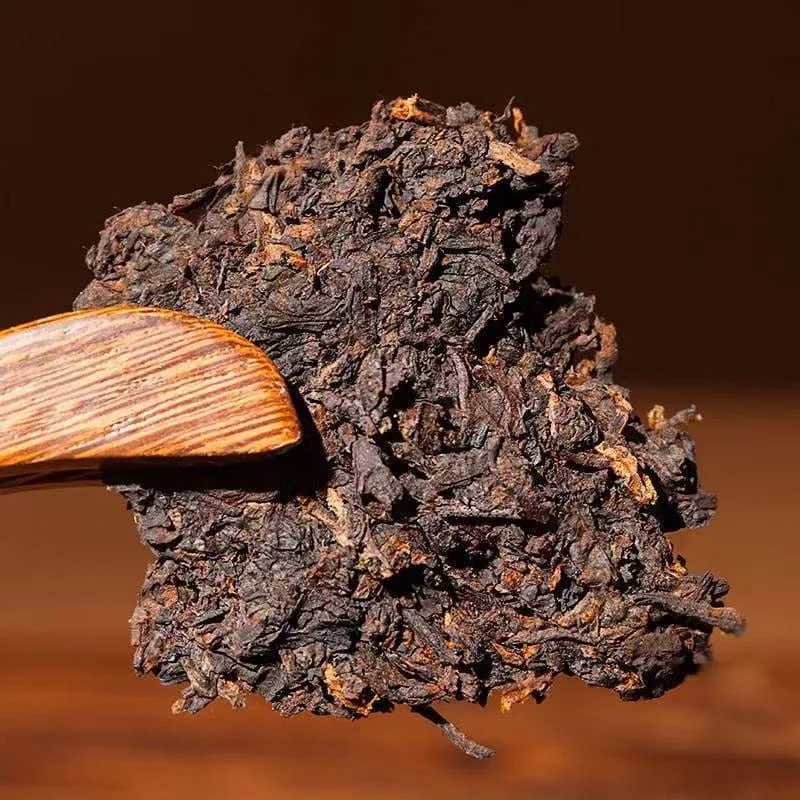
AYM Pu'er
Black Tea Puerh Tea is harvested directly from the source, supplied directly fro the tea plant to Europe, simple, easy to store and easier to brew.Coffee lovers will love YM’s tea!