
In the fast-paced modern lifestyle, many European consumers looking for efficient focus are accustomed to starting their day with a cup of coffee. However, the heart palpitations, nervous tension, and subsequent “caffeine crash” brought by caffeine are driving more and more people to seek healthier, gentler alternatives.
Today, we will deeply analyze the science behind caffeine in tea and coffee, using the rich Chinese black tea and aged Pu-erh tea as examples to guide you through the unique charm of the Eastern leaf.
I. The Caffeine Showdown: What is the Fundamental Difference Between Coffee and Tea?
Chemically speaking, both coffee and tea contain caffeine. Yet, curiously, despite providing a similar wake-up call, their bodily effects feel entirely different. This lies not just in the caffeine content, but in the rate at which it is released into the human body.
1. Content Differences
- Standard Coffee: A standard 8-ounce (approx. 240 ml) pour-over coffee typically contains 95 mg to 200 mg of caffeine. It delivers an immediate boost in alertness, but it is also prone to causing subsequent afternoon fatigue or jitteriness.
- Tea: An equivalent serving of high-quality tea typically contains 40 mg to 70 mg of caffeine, providing a gentle and reliable source of vitality without burdening the nervous system.
2. Release Speed and the Secret of “L-Theanine”
The tea plant (Camellia sinensis) naturally contains a unique amino acid called L-Theanine.
- Coffee’s “Push”: Caffeine is released rapidly in the body, causing heart rates to spike in a short period, which easily triggers anxiety and energy crashes.
- Tea’s “Lift”: L-Theanine crosses the blood-brain barrier, working in synergy with caffeine to promote the generation of Alpha brainwaves. It smooths out the absorption rate of caffeine, eliminating the roller-coaster fatigue cycle.
In a nutshell: Coffee pushes you to get excited, whereas tea lifts you up, delivering a state of “relaxed alertness”—keeping you sharp, focused, and productive without generating physiological anxiety.
II. The Eastern Choice for European Tea Drinkers: Caffeine Experiences of Black Tea and Pu-erh Tea
In our independent select series, black tea and Pu-erh tea have become two of the most popular categories due to their diverse flavors and gentle physical sensations:
1. Black Tea: Warm, Mellow, and Moderately Stimulating
- Through a full-fermentation process, black tea yields a full-bodied taste with malty notes, making it a primary choice for European breakfast teas (such as Earl Grey and English Breakfast).
- It features a relatively high caffeine content among teas, offering an excellent morning wake-up effect.
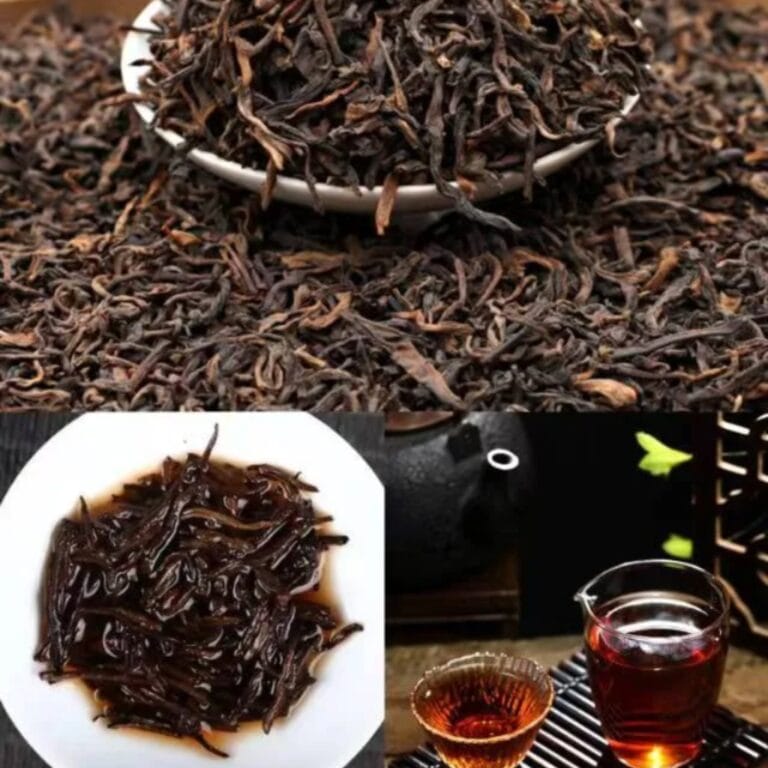
- High-quality black tea locks in rich fruity and malty aromas. It not only pairs perfectly with milk (classic English milk tea) but also provides a lasting and stable energy supply, bypassing coffee’s bitterness and jitteriness.
2. Pu-erh Tea: Aged to Perfection, Soothing to the Stomach
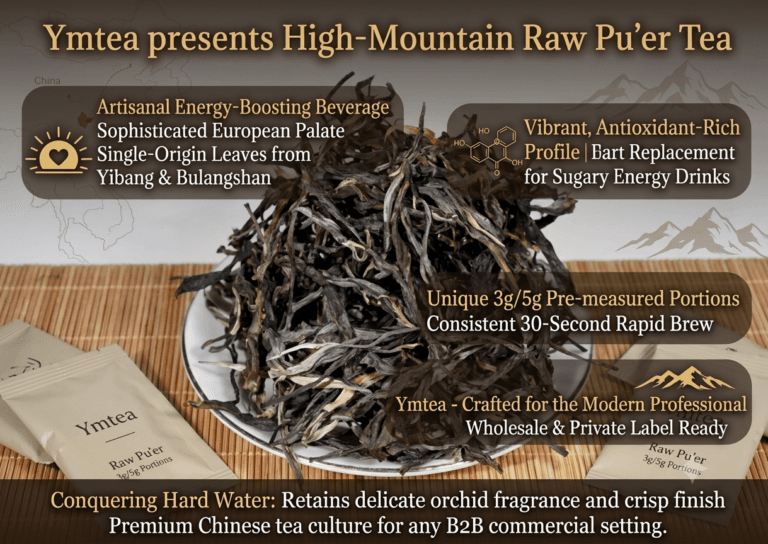
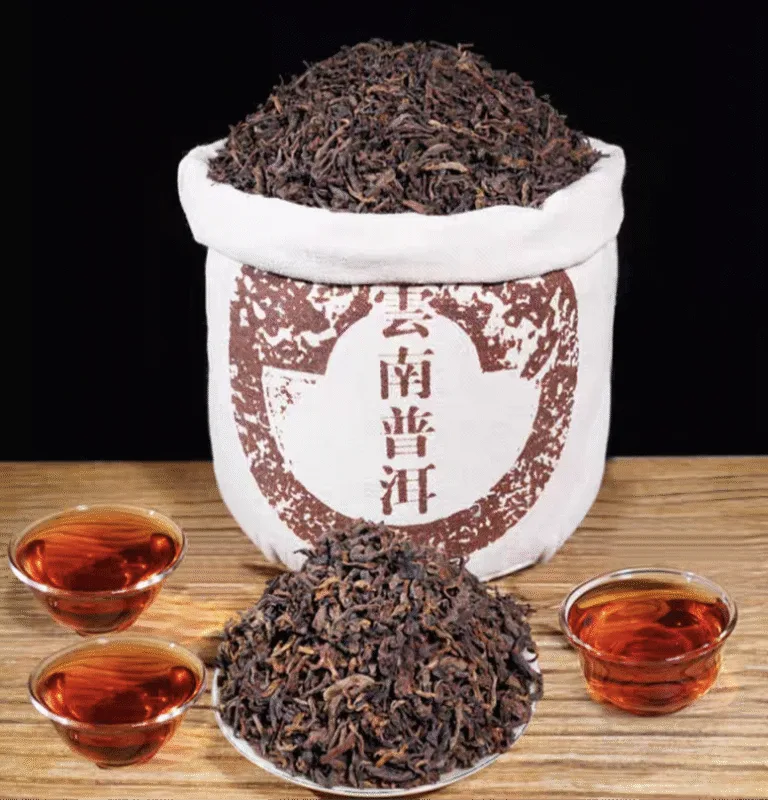
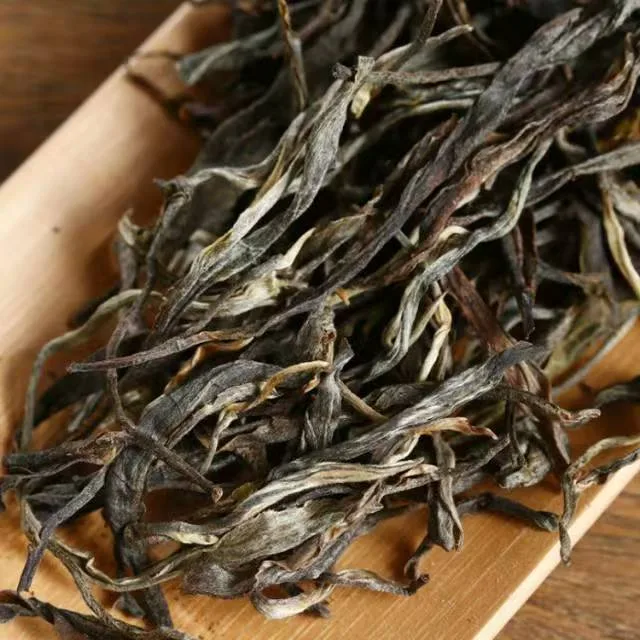
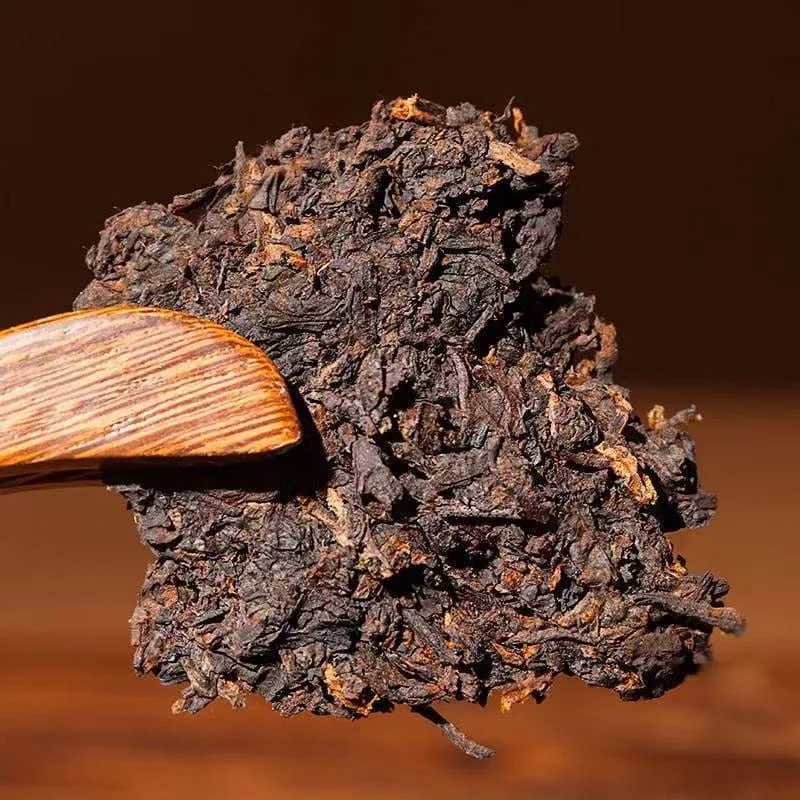
- Sourced from large-leaf sun-dried green tea trees in Yunnan, Pu-erh undergoes post-fermentation and aging, rendering its nature exceptionally mild.
- Caffeine is released slowly within the gentle tea broth, possessing properties that both warm the stomach and aid digestion.
- For European white-collar workers with sensitive stomachs who still need daily focus, drinking a cup of mellow, aged Pu-erh in the afternoon or after a meal creates zero physical burden.
III. From Source to the European Table: YMTEA’s Quality Commitment
The birth of a great cup of tea stems from a reverence for nature and rigorous craftsmanship. Every step is vital: from careful harvesting by tea farmers in high-mountain gardens, to strict temperature control and rolling by seasoned tea masters, down to modern tea manufacturing meeting the highest European Union (EU) standards for pesticide residue testing and aseptic packaging.
As a bridge connecting premium Eastern tea gardens with modern European tea lovers, YMTEA is committed to presenting every single leaf from core production areas in a pure, traceable manner to those pursuing a healthy lifestyle. Whether it is the stomach-warming black tea or the intriguing aged Pu-erh, YMTEA is redefining the standard of a great cup of tea with craftsmanship.
Frequently Asked Questions (FAQ)
Q1: Is the caffeine content in tea much lower than in coffee?
A: Yes. Brewing a cup of tea yields roughly one-third to one-half of the caffeine content found in an equivalent volume of coffee, varying by tea variety, water temperature, and steeping time.
Q2: Why doesn’t tea cause anxiety like coffee does?
A: Tea contains an amino acid called L-Theanine, which alters how caffeine is metabolized in the body. It smooths out the energy curve, promoting calm focus rather than a sudden adrenaline surge.
Q3: Which is better for people with sensitive stomachs: Pu-erh or black tea?
A: Pu-erh tea (especially cooked/Shou Pu-erh) undergoes deep fermentation, making its nature mild and mellow with less stimulation to the gastric mucosa. High-quality black tea is also fully fermented and possesses a warm nature. Both are well-suited for consumers with sensitive stomachs who wish to intake a moderate amount of caffeine for focus.
Q4: How can European enterprises wholesale authentic black tea and Pu-erh tea?
A: Partnering directly with experienced tea manufacturers or certified tea factories ensures product traceability, compliance with EU pesticide residue standards, and access to customized blending services for brands.
AYM Pu'er
Black Tea Puerh Tea is harvested directly from the source, supplied directly from the tea plant to Europe, simple, easy to store and easier to brew.Coffee lovers will love YM’s tea!