
For many European tea brands, importers, and consumers who appreciate Chinese tea, “Zero Residue” / “Pesticide-Free” are high-frequency buzzwords. However, in the highly competitive international tea market, does “Zero Residue” truly mean absolute “zero detection” in laboratory testing?
For tea producers, manufacturers, and factories within the global supply chain aiming to successfully sell premium Chinese Pu-erh and black tea to Europe, a deep review and understanding of the strict European Union (EU) food safety regulations is a vital business strategy.
1. “Zero Residue” in the Eyes of the EU: Not Absolute Zero, But 0.01 mg/kg
In the international tea trade, overseas buyers frequently ask: “Can your tea achieve ‘Zero Residue’?”
However, from the perspective of rigorous modern food safety science and current EU regulations, absolute “zero residue” is a pseudo-concept. What actually determines whether tea can smoothly enter the European market is the extremely stringent Maximum Residue Limits (MRLs).
The “Default MRL” Rule
In the EU food safety system, when no specific MRL value is established for a particular pesticide, a default standard of 0.01 mg/kg automatically applies.
What does 0.01 mg/kg mean?
This is equivalent to just 1 gram of trace residue in 100 tons of tea. Under today’s precision testing instruments, this is practically synonymous with ND (Non-Detected).
Therefore, when European clients talk about “Zero Residue,” they legally mean: perfectly complying with the EU’s ultra-strict default limits for low residues, or reaching a laboratory non-detected status. Tea factories must rely on advanced biological control and meticulous management to ensure final product test results fall safely below the EU MRL lines.
2. Pu-erh and Black Tea: Overcoming the Two “Hardest Nuts to Crack” in EU Testing
Among the tea categories exported from China to Europe, black tea and Pu-erh tea hold significant market shares—but they are also the primary targets of intensive scrutiny by EU customs. Tea enterprises face distinct compliance challenges for each:
🔴 Black Tea: Striking Control of Pesticide Residues and Cross-Contamination
As a fully oxidized (fermented) tea, black tea enjoys a massive consumer base in Europe. However, traditional cultivation models that rely on chemical pesticides can easily fail during random EU customs inspections.
Pest and disease control during the cultivation and full-oxidation processing phases of black tea is highly sensitive. Any minor oversight in pesticide application can lead to an entire shipment being rejected at the border.
Top-tier tea manufacturers now widely adopt physical pest control (such as yellow sticky traps and insecticidal lamps) alongside biological agents. This ensures that while meeting European preferences for rich flavor profiles, all chemical indicators remain securely below the EU MRL thresholds.
🟤 Pu-erh Tea: Managing Both Pesticides and Contaminants
Pu-erh tea (especially Ripe/Shu Pu-erh) is a post-fermented tea, meaning its long-term aging process demands pristine raw materials and storage environments. If raw leaves are contaminated at the source with high-risk pesticides banned by the EU, no amount of aging will clear the lab tests. Furthermore, the EU strictly scrutinizes non-intentionally added contaminants:
| Contaminant | Source of Risk | Corrective Actions & Upgrades |
| Anthraquinone | Coal-fired smoke pollution during tea drying, or non-compliant packaging materials. | Transition to clean energy by adopting all-electric or natural gas roasting; upgrade to food-grade packaging materials. |
| Perchlorate | Contaminated irrigation water sources, or trace accumulation from fertilizers. | Strengthen source monitoring by implementing strict pre-screening and testing of soil and water inputs in tea gardens. |
3. From Tea Garden to Teacup: How Modern Supply Chains Align with High EU Standards
Achieving EU compliance cannot be done retroactively through late-stage “washing” or “sorting.” It requires deep synergy and meticulous management across the entire supply chain:
- Tea Producers (Source Control): Must abandon highly toxic and persistent pesticides at the source, shifting to biological controls and natural organic fertilizers. In high-mountain tea regions like Yunnan, maintaining ecological balance is the fundamental key to pest control.
- Tea Manufacturers (Processing Specifications): Must strictly execute HACCP and GMP systems during the processing stage to eliminate cross-contamination. Cleanliness in workshops and equipment must be guaranteed at every step—from fresh leaves to dry tea.
- Exporting Tea Factories (Quality Assurance Testing): Globally-minded tea suppliers will send every batch of Pu-erh and black tea to authoritative international institutions like Eurofins or SGS before shipment to conduct comprehensive multi-residue screenings covering hundreds of pesticide items.
4. Supply Chain Transparency: The Core Trust Asset for Building International Brands
Faced with frequent updates to EU regulations, premium overseas tea brands and industrial food clients look past single test reports when choosing Chinese partners; instead, they evaluate the supply chain’s continuous compliance capability.
This explains why forward-looking tea industry supply chain integrators, such as YMTEA, have become highly favored in the international market in recent years. Excellent supply chain service providers do not just perform a single “exam-prep” test before export; they intervene right from the source:
- Coordinating with upstream tea producers to standardize pesticide and fertilizer use;
- Guiding tea manufacturers to upgrade processing equipment, fundamentally blocking contamination risks like anthraquinone and perchlorate;
- Establishing a robust, full-link traceability system “from soil to teacup.”
Conclusion: Compliance is the Only Passport to the European Blue Ocean
European tea importers and independent direct-to-consumer (D2C) shoppers are highly willing to pay a premium for top-quality, high-safety Chinese tea. Whether it is the mellow, aged aroma of Pu-erh or the sweet, bold profile of black tea, meeting EU MRL standards serves as the golden key to unlocking the European market.
Internalizing “EU Compliance” as the foundational logic of enterprises and supply chains is the definitive path for traditional Chinese tea to achieve modernization and internationalization.
📧 Looking for Reliable EU-Standard Tea Sources?
If you are searching for premium Chinese Pu-erh and black tea that meets EU MRL standards, or require customized supply chain solutions, please feel free to contact us. Our tea experts are ready to provide comprehensive compliance support.
💡 Frequently Asked Questions (FAQ)
Q1: Does Pu-erh tea get lower in pesticide residues the longer it is aged?
A: This is a common misconception. Pesticide residues in tea possess varying degrees of chemical stability. While some residues degrade over time, most fat-soluble pesticides or heavy metal residues will not vanish into thin air through aging. Therefore, when purchasing Pu-erh tea, the ecological growing environment of the source tea producer and the pre-shipment residue test reports (complying with EU standards) are the true guarantees of safety—not the age of the tea.
Q2: Why are EU pesticide residue testing standards for Chinese black tea stricter than other regions?
A: The EU enforces the world’s most stringent rapid alert mechanisms for food safety. For imported black tea, the EU not only screens for a massive list of parameters (often encompassing hundreds of pesticides) but also takes a “zero-tolerance” stance (the default limit of 0.01 mg/kg) on many pesticides that have not been evaluated by the EU or are banned within the Union. This requires tea manufacturers to follow pollution-free or organic standards 100% during black tea cultivation and processing.
Q3: How do platforms or brands like YMTEA ensure that their tea does not exceed limits?
A: Top-tier tea brands and supply chain service providers typically utilize a “Source Management + Batch-by-Batch Testing” model. By directly partnering with export-qualified tea factories and producers, they establish a digital traceability system from tea garden to teacup. Prior to factory departure and export, laboratory sampling is conducted strictly against EU standards, fundamentally preventing non-compliant products from entering the European market.
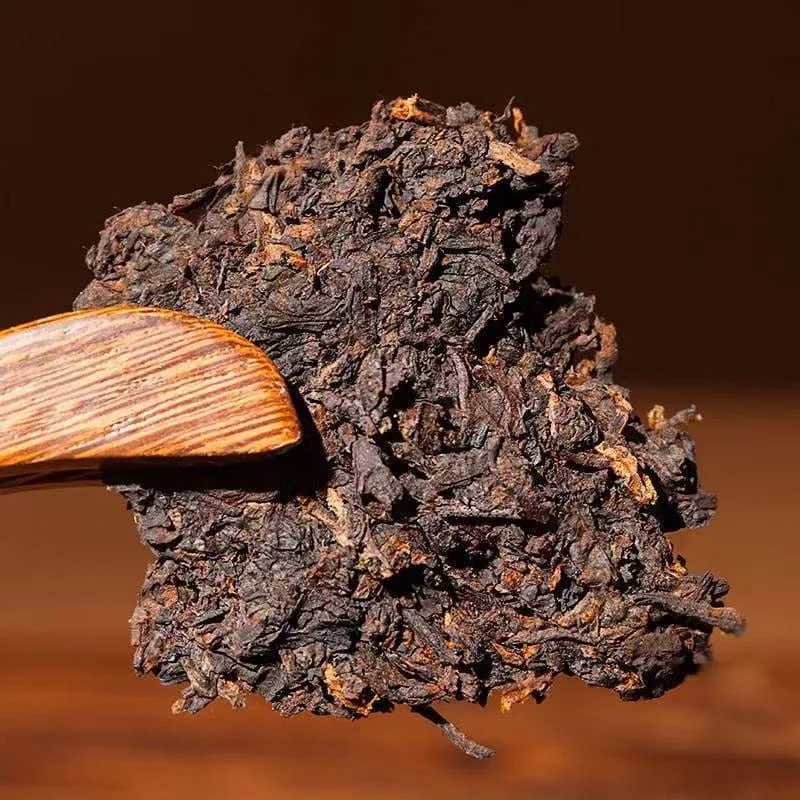
AYM Pu'er
Black Tea Puerh Tea is harvested directly from the source, supplied directly fro the tea plant to Europe, simple, easy to store and easier to brew.Coffee lovers will love YM’s tea!