
How many people usually don’t like to drink plain water, preferring to add some tea leaves, dried fruits, or even herbs. Brewing this casually every day feels like they can drink more water and take care of their health at the same time—it’s truly killing two birds with one stone.
However, this seemingly healthy ‘wellness’ habit may actually hide significant health risks. Many fans have come across videos showing soil and wood chips mixed into wellness teas and have reached out to us for help, asking if this is really true.
With the fans’ questions and concerns in mind, we decided to investigate.
We conducted an undercover visit to a factory, selected two packs of wellness tea from the market, and also placed orders for 14 different wellness teas from various online platforms, all of which were sent to a laboratory for testing.
It turns out that underweight packaging and substituting inferior products are minor issues—there are even more frustrating problems…
After more than half a year of research, we’ve finally uncovered the mystery behind wellness teas. Let’s see if any of the ones you drink are on the list~
01 Factory Assessment
The results were shocking
Our investigation team first conducted undercover visits to the raw material markets and factories.
What we saw on site was truly shocking. As soon as we entered the market, the owner told us that some e-commerce business owners use cheaper Japanese honeysuckle to impersonate the more effective Chinese honeysuckle.
Even more shocking is that when we questioned the actual effectiveness of these medicinal ingredients, a factory manager openly admitted without any hesitation: ‘There are very few active ingredients in the floral tea; its effects are just used to fool people… little girls just like to drink it.’
After we purchased a 100g tea bag worth 50 euros, we contacted a contract manufacturer and requested a 1:1 replication of the contents of the tea bag.
The factory quoted us 10 euros.
You heard that right, 30 bags only cost 10 euros.
02 Laboratory Testing
Coliform bacteria levels are severely exceeded.
In addition, the hygiene conditions of the raw materials are extremely concerning. For example, dried mulberry raw materials are placed on the ground, and workers step on the materials wearing their everyday shoes.
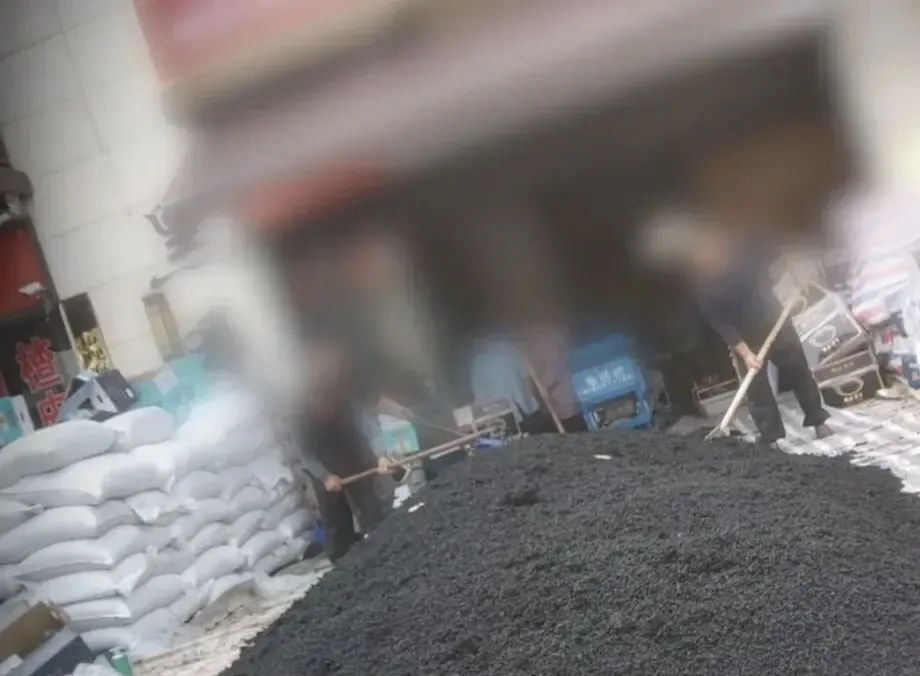
Workers wear shoes while processing dried mulberries
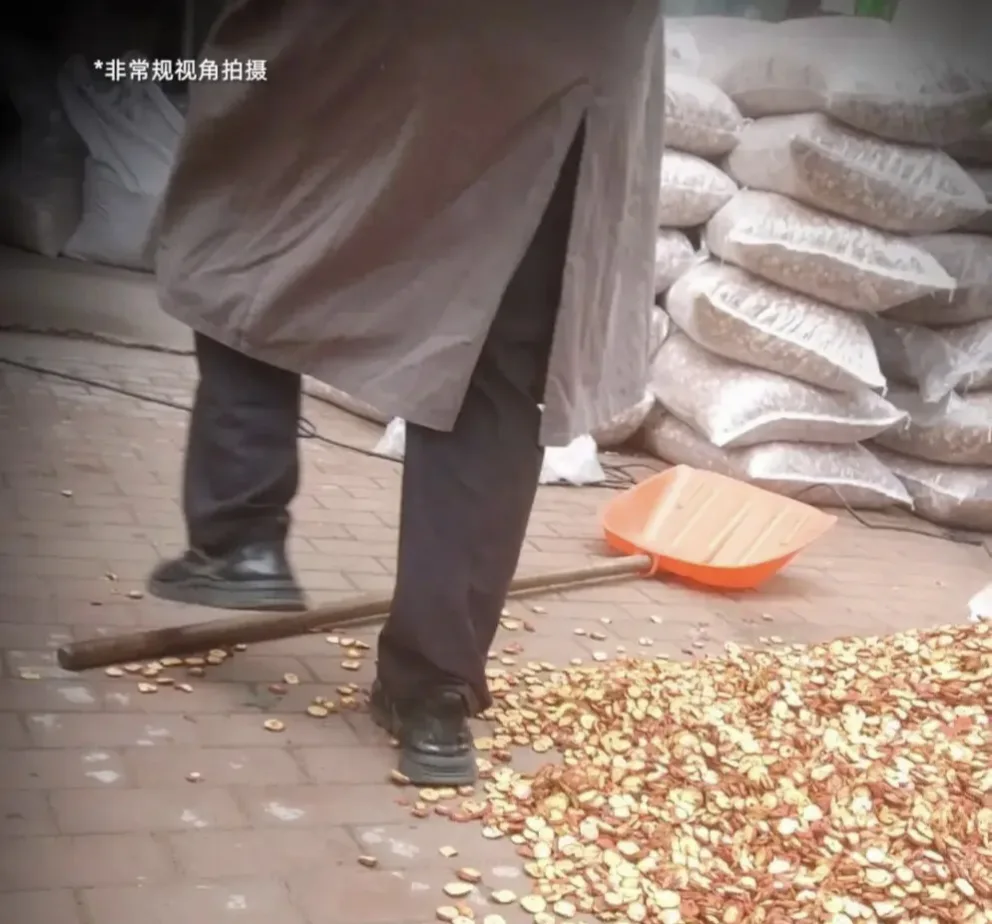
Hawthorn slices are scattered around, and workers step on them directly.
We contacted a tea bag contract manufacturer to ask whether they sterilize the tea bags. The factory staff told the technician that they don’t sterilize in winter; they only do so in summer.
With such raw materials and production conditions, what is the actual hygienic condition of the finished tea bags? We decided to let testing speak for itself.
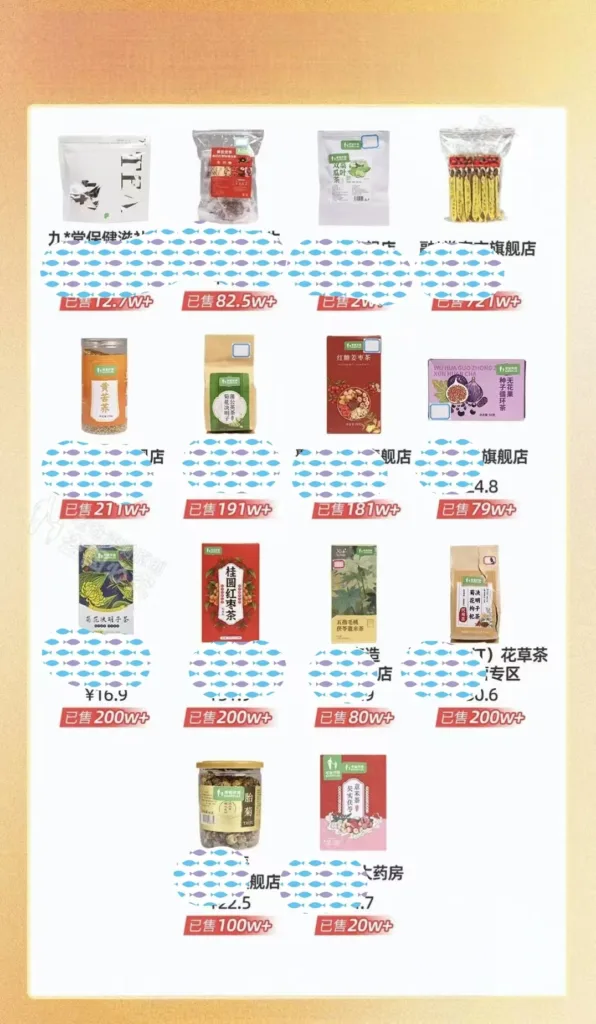
We obtained two packs of health tea from the local market and, through notarized orders, purchased 14 popular health tea products online, each with sales of millions, making a total of 16 samples. All samples were sent to a professional third-party laboratory for rigorous testing.
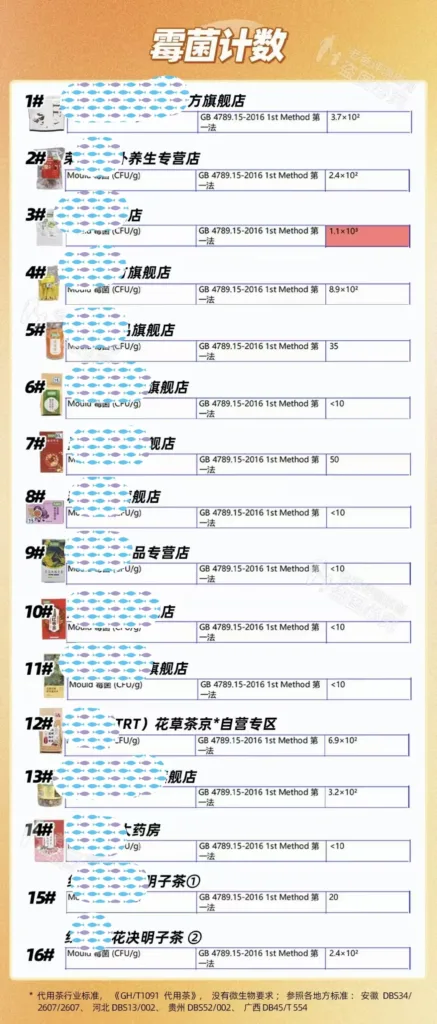
The testing first focused on the microbial contamination of the tea bags themselves (unbrewed), mainly checking for mold, total colony count, and coliform bacteria.
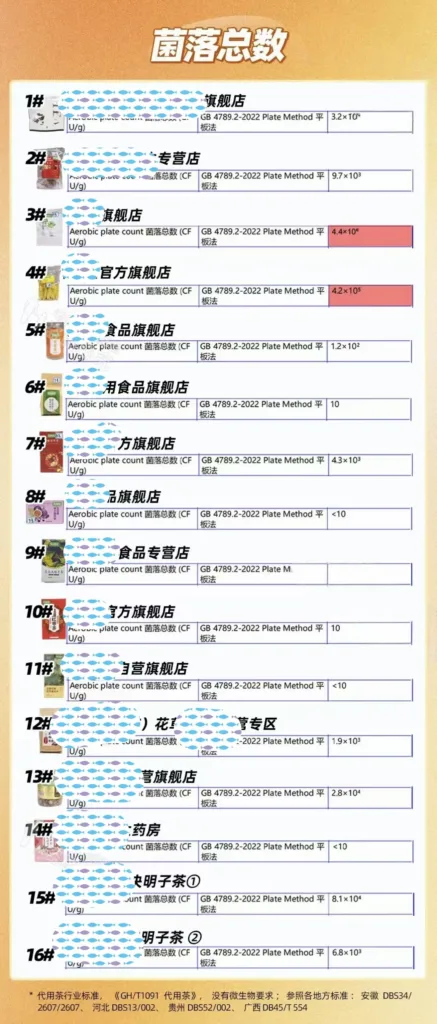
Among 16 health tea bags, two showed a high total bacterial count, indicating a relatively severe level of microbial contamination. Nine samples tested positive for mold, with one showing a particularly high level. Most strikingly, eight samples tested positive for coliform bacteria, with one reaching an astonishing 350,000 CFU/g. Where do coliform bacteria come from? They primarily originate from the intestines of humans and animals, which means they may be related to fecal contamination.
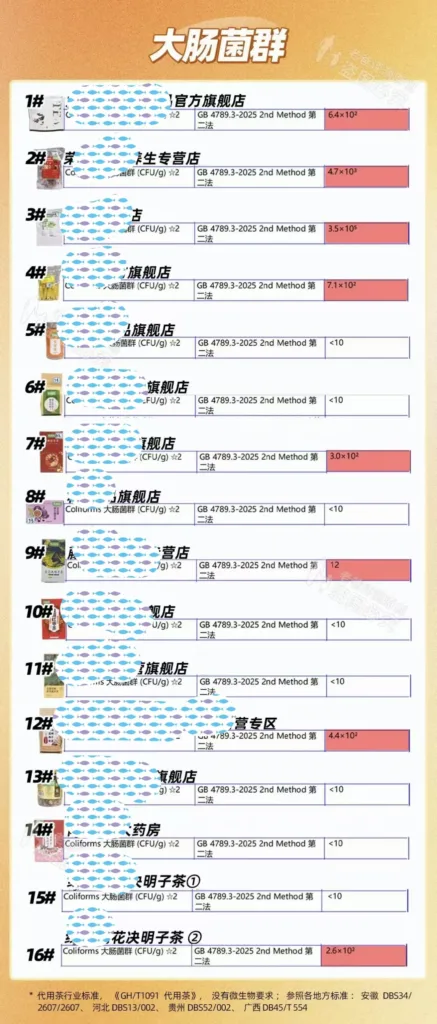
The number of coliform colonies was counted after cultivation, and the results are expressed as the number of coliform colonies per gram (ml) of sample, i.e., CFU/g(ml). The hygienic significance of coliforms includes two aspects: one is as an indicator of fecal contamination of food by humans and warm-blooded animals, since coliforms originate directly from human and warm-blooded animal feces; the other is as an indicator of contamination of food by intestinal pathogenic bacteria, since coliforms share the same source as intestinal pathogens and generally have the same survival time in external environments as major intestinal pathogens. Coliforms can serve as an indicator of food hygiene quality, but since coliforms are thermophilic bacteria that generally cannot grow below 5°C, this may not be suitable for aquatic products dominated by psychrotrophic bacteria, especially frozen foods. Therefore, in recent years, enterococci have also been used as indicators of fecal contamination.
Reference: ‘Nutrition and Food Hygiene (8th Edition)’
Such a high level of coliform bacteria is frightening enough, let alone the fact that this is meant to be soaked in water and consumed.
03 This dirty
What else can be done
Faced with such shocking hygiene conditions, the question everyone is undoubtedly most concerned about is: Can these tea bags, which have high total bacterial counts, mold, and coliform bacteria, still be consumed after brewing?
Can we effectively kill bacteria and reduce health risks through everyday brewing methods?
To answer this question, we asked laboratory researchers to simulate people’s daily drinking habits, brewing the tea in 300 milliliters of boiling water for 5 minutes, and then conducted microbiological testing on the brewed tea again.
The test results have one piece of good news and one piece of bad news:
The good news is: Except for one type of bacteria, the other 13 types were basically all eliminated.
Daily brewing with boiling water (freshly boiled water, brewed for 5 minutes) can indeed effectively kill most microorganisms.
Experimental data show that for most of the tea bags we tested, the microbial indicators in the tea significantly decreased after brewing. This indicates that for products with relatively light contamination, the proper brewing method can largely ensure drinking safety.
The bad news is: For products from production environments with extremely poor hygiene or severely contaminated raw materials, brewing with boiling water is not foolproof.
This indicates that when the initial contamination is too severe, a brief steeping may not completely eliminate all microorganisms, and there is still a considerable food safety risk.
It is ultimately recommended that before drinking these types of health teas and various tea bags, you should steep them in boiling water for a while, and it’s best to boil them before drinking.
04 Closing Remarks
We are publishing this content not to completely dismiss the category of health teas, but to remind everyone to be vigilant when choosing and consuming such products. True wellness should be based on safety and science. Do not let good intentions of pursuing health turn into potential harm to your body due to issues with the quality of the products themselves.
Regarding Tea Bags, a Health Reminder from YMTEA:
Dear Tea Friends,
There is a wide variety of tea bags on the market, but their quality varies greatly. Here, YMTEA warmly reminds you: please keep your eyes open when purchasing! Do not let price be your only consideration; pay attention to the essence of the tea.
For the health of you and your family, and to ensure that every sip of tea brings real nourishment, firmly say “no” to extremely cheap, low-quality tea! Choose tea bag products made from visible and trustworthy whole tea leaves, allowing genuine ingredients to nourish your body and mind, and let health and goodness flow in every cup. Quality is the best promise for your health!
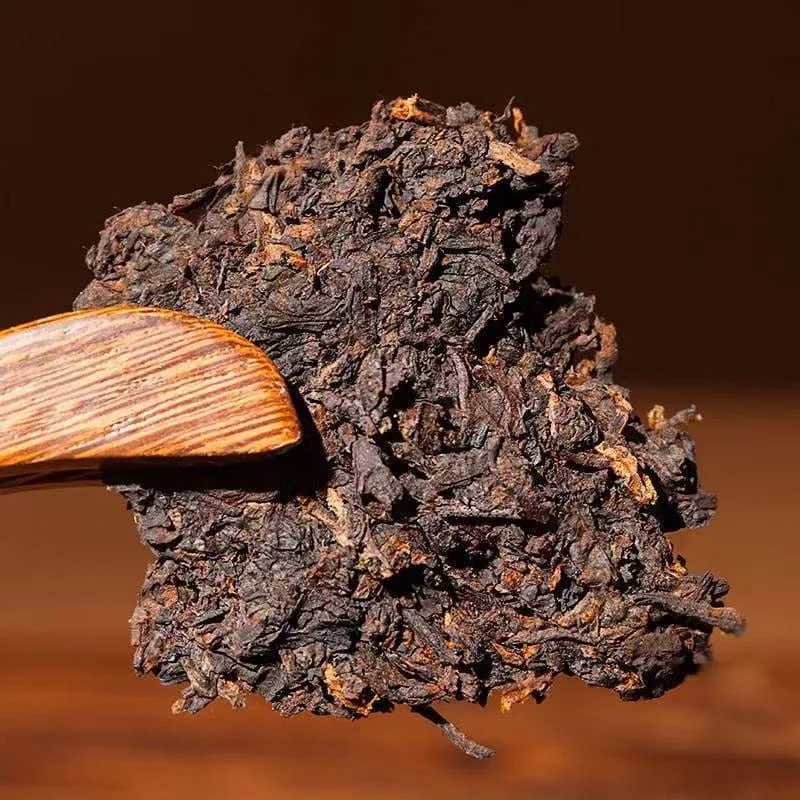
AYM Pu'er
Black Tea Puerh Tea is harvested directly from the source, supplied directly fro the tea plant to Europe, simple, easy to store and easier to brew.Coffee lovers will love YM’s tea!