

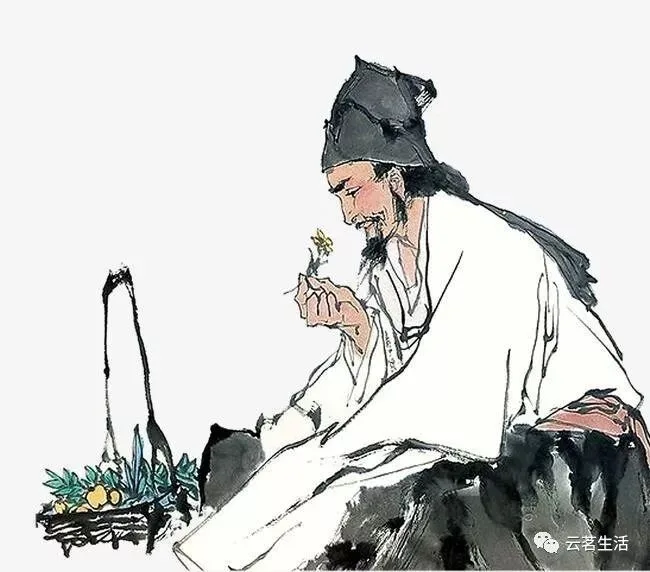
A long time ago, there was a legend in China that “Shennong tasted a hundred herbs, encountered seventy-two poisons a day, and got tea to solve it”. It’s about Shennong. At that time, people ate raw, so they often got sick. In order to relieve people’s pain, Shennong tried all the plants he saw to see the changes in their stomachs and judge which ones were non-toxic and which were poisonous. One day, he didn’t know what poison he had eaten and fell to the ground under a tree, and suddenly, a leaf of this tree fell beside him, and he put it in his mouth, and this leaf saved Shennong, and suddenly his body felt much better, so he got up and studied and collected some leaves of this tree, thinking that it was a sacred tree, so he called this leaf “rubbing”. Later, people called “rubbing” as “tea”. Shennong has been climbing mountains and wading through rivers for many years, trying a hundred herbs, and has to be poisoned several times a day, all relying on tea to save him. But the last time, Shennong didn’t have time to eat tea, and was poisoned by poisonous weeds. It is said that at that time he saw a small grass with small yellow flowers, and the calyx was moving one by one, and he was curious, so he put the leaves in his mouth and chewed them slowly. After a while, he felt uncomfortable in his stomach, and before he could eat the tea, his stomach was disconnected section by section, and it turned out that he had been poisoned by the broken intestine grass. People use such stories to praise the story of Shennong tasting herbs.
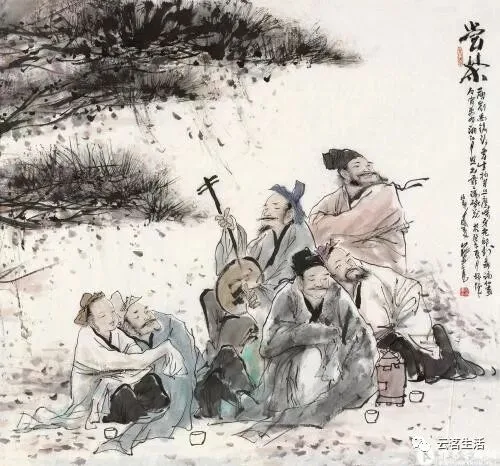
Legend has it that Shennong had a unique ‘crystal belly,’ with transparent skin that clearly revealed his internal organs, allowing him to visually observe how food reacted inside his body. He wielded a red whip and tasted hundreds of herbs to determine which plants could be used as food and which could be used as medicine to treat illnesses. One day, Shennong accidentally ingested a poisonous golden rolling pearl, and the toxin spread rapidly. He instantly felt dizzy and his internal organs burned, collapsing under a large tree, near death. At that moment, a gentle breeze blew, and a few tender green leaves floated down. Shennong picked one up, chewed it, and tasted a bittersweet flavor with a lingering sweetness and a refreshing fragrance. Even more miraculous, after the leaf entered his stomach, it moved around like a soldier inspecting the intestines, and wherever it went, the dark toxin gradually disappeared. His previously heavy body gradually regained lightness, and his mind became clear. Overjoyed, he named this leaf ‘Cha’ (which later evolved into ‘tea’) and remembered its detoxifying properties.
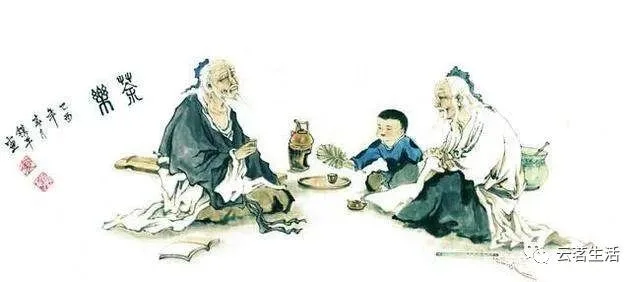
Afterwards, during Shennong’s process of tasting hundreds of herbs, if he inadvertently ingested a poisonous one, he would immediately eat this particular leaf to counteract the toxicity. The *Huainanzi·Xiuwu Xun* records: “Shennong tasted the flavors of hundreds of herbs and the sweetness and bitterness of spring water, so that the people would know what to avoid and what to use. At that time, he encountered seventy poisons in a single day,” and tea became his “secret weapon” against toxins. Another account says that while Shennong was tasting herbs, he encountered seventy-two poisons in one day and was fortunately saved by tea. Lu Yu in the *Classic of Tea* also mentioned, “The practice of drinking tea originated with Shennong,” confirming the deep connection between tea and Shennong.
However, the hero’s ending carries a tragic note. On one occasion, Shennong mistakenly ate the highly poisonous herb known as ‘Siegeheart Grass’; its toxicity acted rapidly, and before he could use tea to detoxify, he collapsed and died. His sacrifice left future generations with invaluable knowledge of plants, and the detoxifying effects of tea were forever remembered by humanity.
Although this legend has mythical elements, it reflects the early people’s understanding of tea: initially, tea was regarded as a medicinal plant for its detoxifying and stimulating properties; as experience accumulated, people gradually discovered that tea could not only treat illnesses but also serve as a daily beverage, eventually evolving into a cultural symbol passed down through thousands of years of Chinese tradition. The story of Shennong tasting tea not only celebrates the spirit of our ancestors’ exploration of nature and selfless dedication but also imbues tea culture with the fundamental concept of “medicine and food sharing the same origin,” becoming the oldest and most captivating introduction to Chinese tea culture.
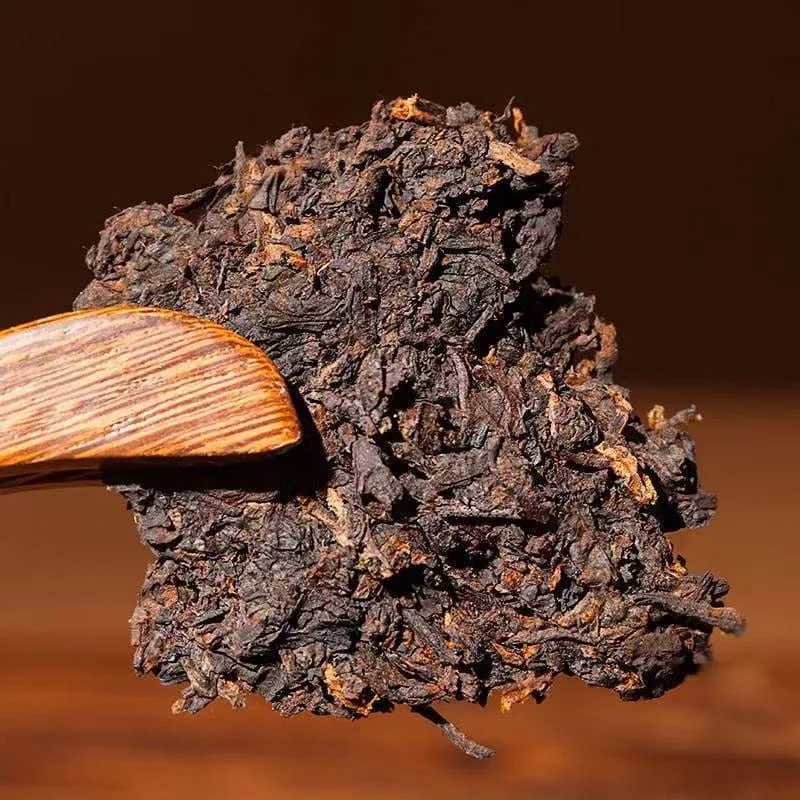
Wholesale of Loose-Leaf Tea
Black Tea Puerh Tea is harvested directly from the source, supplied directly fro the tea plant to Europe, simple, easy to store and easier to brew.Coffee lovers will love YM’s tea!