


Yunnan Tuocha is a type of compressed tea, made from selected high-quality sun-dried green tea leaves and refined through high-temperature steaming and pressing.
Morphological characteristics
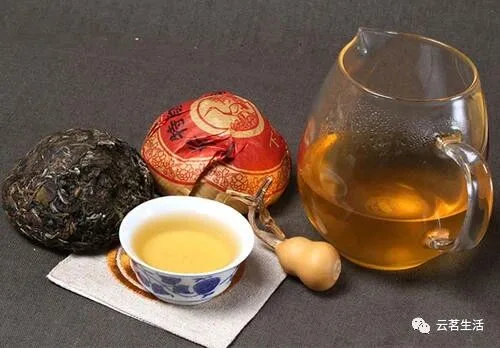
Pu’er Tuocha, from the top, looks like a round bun, and from the bottom, it resembles a thick-walled bowl, with a concave center, quite distinctive. The types of Tuocha vary according to the raw materials, divided into green tea Tuocha and black tea Tuocha. Green tea Tuocha is made from finer, tender sun-dried green Maocha and shaped through steaming and pressing; black tea Tuocha is made from Pu’er tea and also shaped through steaming and pressing. Pu’er tea appears with plump, even strands and a dark, glossy color, covered with dense white hairs. There are many varieties of tea. According to Ruan Fu’s ‘Discussion on Pu’er Tea’ from the Qing Dynasty: ‘Pu’er tea’ picked in February has very fine white buds, called Maojian, used as tribute tea; tea that is picked and steamed, then kneaded into tea cakes, with leaves slightly tender, is called bud tea; tea picked in March and April is called Xiaoman tea; tea picked in June and July is called Guhua tea; large and round tea is called Jintuan tea; small and round tea is called Nuer tea.

Tuo tea is a traditional product of Yunnan tea, with a long history and a reputation that dates back to ancient times. It was recorded as early as the Wanli era of the Ming Dynasty in the book “Dian Lue”: ‘Both scholars and commoners use Pu’er tea, which is steamed and formed into shapes.’ According to historical records, Yunnan Tuo tea, shaped like an inverted bowl, has been produced in its standardized form for more than sixty years. Its distinctive shape and excellent quality have long been well known, earning fame both domestically and internationally.

Origin of the Name
There are many stories about the origin of the name ‘Tuocha’. Some say it is named ‘Tuo’ because the finished product is shaped like a lump, transforming from ‘lump’ to ‘Tuo’. Others claim that in the past, Yunnan Tuocha was mainly sold to the Tuojiang area in Sichuan, hence the name ‘Tuocha’. Its appearance is different from ordinary tea and quite distinctive. From the top, it looks like a round bun, while from the bottom it resembles a thick-walled bowl with a concave center. Each piece weighs approximately 100 grams, 250 grams, or other variations. Typically, during packaging, five pieces are wrapped together with bamboo leaves and tied securely with tree bark cords or bamboo strips, which is quite interesting. It is said that this method also facilitated long-distance transport and long-term storage in ancient times.
Efficacy
Dr. Émile Carobi, Director of Clinical Teaching at the Saint-Antoine Medical School in Paris, France, demonstrated through clinical trials using Yunnan Pu’er Tuocha that: “Yunnan Pu’er tea has a good effect on reducing lipoprotein content and cholesterol levels.” Kunming Medical University in China also conducted 55 clinical trials on the use of Yunnan Pu’er Tuocha to treat hyperlipidemia and compared it with 31 cases treated with Antuomin, a drug known for its lipid-lowering effect. The results showed that Pu’er tea’s efficacy was superior to that of Antuomin. Long-term consumption of Pu’er tea can reduce cholesterol and triglycerides, so long-term drinking of Pu’er tea has a therapeutic effect on obesity. Drinking Pu’er tea can cause physiological effects such as vasodilation, lowered blood pressure, slower heart rate, and reduced cerebral blood flow, thus having beneficial effects for patients with hypertension and cerebral arteriosclerosis. Pu’er tea has a relatively good effect on softening blood vessels, although its effect on promoting intestinal circulation and detoxification is somewhat weaker.Research Achievements on Pu’er Tea’s Blood Sugar-Lowering Function VerifiedOn the 27th, Pu’er City in Yunnan Province announced that the research results on the mechanism by which Pu’er tea lowers blood sugar had recently been verified by the Yunnan Provincial Department of Science and Technology. This provides strong theoretical support for the scientific consumption of Pu’er tea to prevent and treat type 2 diabetes. It is understood that diabetes is one of the most common chronic diseases, with type 2 diabetes accounting for more than 90% of all patients. Among obese individuals in China, 30% have type 2 diabetes. Research indicates that type 2 diabetes is closely related to abnormal (increased) activity of a certain biological enzyme in the body, which is gradually becoming an important target for treating type 2 diabetes. Some research institutions and companies at home and abroad have been seeking inhibitors of this enzyme, but no safe inhibitor without side effects has yet been applied clinically.
Storage
The storage of Pu-erh tea is fundamentally different from that of other teas. Most teas are collected with the goal of “preservation” to prevent oxidation, making “keeping fresh” the starting point and purpose of all measures. What conditions are necessary for storing Pu-erh tea?
Maintaining appropriate temperature and humidity is essential for the “aging” of Pu-erh tea. As is well known, microorganisms can only reproduce quickly under certain temperature and humidity conditions. The “aging” process of Pu-erh tea is actually an “oxidation” process. The activity of tea polyphenol oxidase is enhanced in the range of 20–40°C; below this range, enzyme activity is lower, and above it, enzyme activity diminishes with rising temperature. Microbial activity also increases with higher temperature and humidity, but excessive heat can deactivate enzymes, while too much humidity can cause mold, affecting the tea’s drinking quality. Ideally, the moisture content of Pu-erh tea should be controlled between 8% and 10%, and the storage temperature should be maintained between 20–25°C.
For most households, it is best to store Pu-erh tea near a window on a balcony, opening the windows in the morning and evening to keep the air fresh and circulating. This facilitates the combination of tea with oxygen in the air, accelerating non-enzymatic oxidation and promoting “aging.” “Light-permeable” storage refers to preserving Pu-erh tea under “natural light.” Tea should not be directly exposed to sunlight, nor should it be stored in complete darkness. Light can induce photosensitive oxidation of chlorophyll, causing the tea to darken significantly. The combined effects of light and air accelerate tea aging, gradually forming the characteristic qualities of Pu-erh tea: a deep red brew, mellow taste, and an aroma that improves with age.
The environment for storing Pu-erh tea must be free of any contamination. Contamination is strictly taboo for storing any tea, and Pu-erh tea is no exception. Because Pu-erh tea contains terpene compounds and high-molecular-weight palmitic acids, it can quickly absorb the odors of other substances, masking or altering its original aroma. Therefore, when storing Pu-erh tea at home, it is crucial to prevent contamination from common household odors such as cooking fumes, cosmetics, medications, deodorizers, mosquito repellents, and other fragrant substances, as well as human body odors. If possible, such households should have a dedicated “tea storage room,” or alternatively, transform balcony areas or other secondary living spaces into tea storage shelves or cabinets.
AYM Pu’er
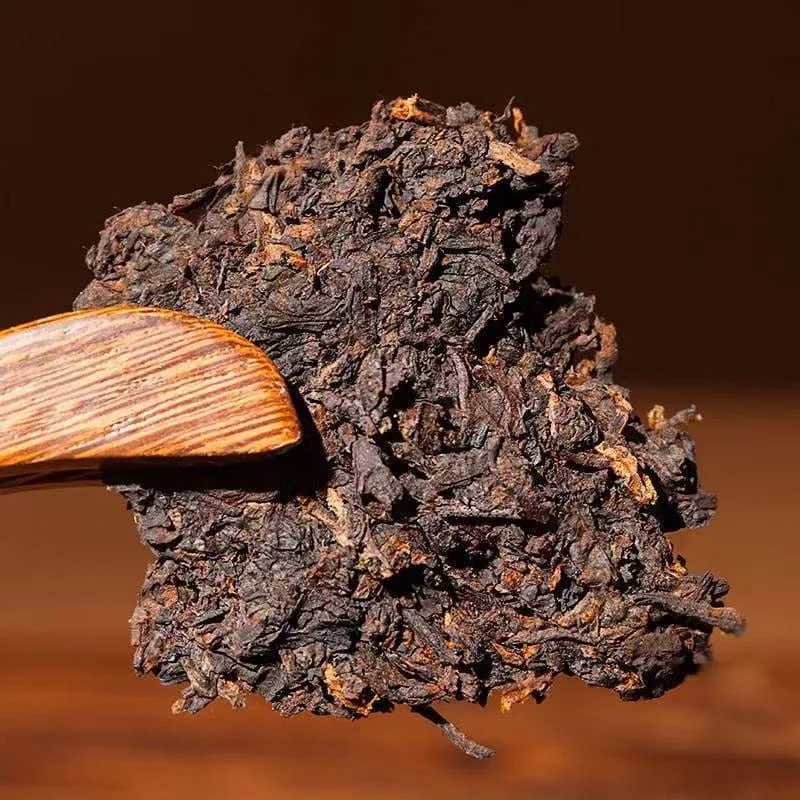
Black Tea Puerh Tea is harvested directly from the source, supplied directly fro the tea plant to Europe, simple, easy to store and easier to brew.Coffee lovers will love YM’s tea!