


Tasting tea means appreciating the flavor of tea; drinking tea. Generally speaking, it is a more elegant and leisurely artistic enjoyment. Ming Dynasty’s Yang Shen in ‘Reply to Zhang Shuibu’s Shaping Tea Song’ wrote: ‘Your tea song, like writing history, does not just taste the tea but also the person.’ Liu Yazi, in the poem ‘To Chairman Mao in Yan’an,’ wrote: ‘If the sky allows us to share the concern for the country, we cannot forget tasting tea together across the seas of Guangdong.’

Requirements for Water
Tea enthusiasts have a saying: “There are many kinds of tea and many kinds of water, but only good tea and good water make a delicious taste.” Ancient scholars had many discussions on the suitable quality of tea water, though their statements were not exactly the same. Summarizing them, they can generally be categorized as follows:
(1) Emphasizing choosing the “source” of water first: For example, in Tang Dynasty Lu Yu’s *The Classic of Tea*, he wrote, “For the water, use mountain water first, river water next, and well water last.” In Ming Dynasty Chen Meigong’s poem *Tasting Tea*, he wrote, “Spring water emerges from rocks, purer in essence; tea born on peaks, richer in flavor.” Both suggest that the quality of water suitable for tea is closely related to its source.
(2) Emphasizing that the water should be “alive”: For instance, Northern Song Dynasty Su Dongpo’s poem *Drawing River Water to Brew Tea* says, “Living water must be brewed with living fire, drawn near the fishing rocks with deep affection. A large ladle stores the water for friends in a spring jar, a small spoon divides river water into the night pot.” In Song Dynasty Tang Geng’s *Record of Tea Contests*, it is said, “Water should not concern whether it comes from river or well; what matters is that it is alive.” These examples all indicate that good tea water is valued for being “alive.”
(3) Emphasizing that water should be “sweet”: In Song Dynasty Cai Xiang’s *Tea Record*, he believed, “If spring water is not sweet, it can ruin the tea’s flavor.” In Ming Dynasty Luo Lin’s *Tea Explanation*, he wrote, “The plum rain is like syrup, nourishing all things, its taste uniquely sweet; after the plum season, it is unsuitable for drinking.” These emphasize that good tea water should be valued for its “sweetness.” Only if the water is “sweet” can the full “flavor” of the tea emerge.
(4) Emphasizing that water quality needs to be “clear”: During the Song Dynasty, the trend of tea competitions emphasized that tea liquor should be prized for its whiteness. This placed even greater importance on the purity of water, with selection focusing on “clear mountain spring water.” Ming Dynasty Xiong Mingyu said, “To cultivate water, stones should be placed in the jar, not only benefiting the water, but also making the clear spring even more refined, and peace of mind will not be far.” This indicates that water suitable for tea should prioritize “clarity.”
(5) Emphasizing that water should be “light.”
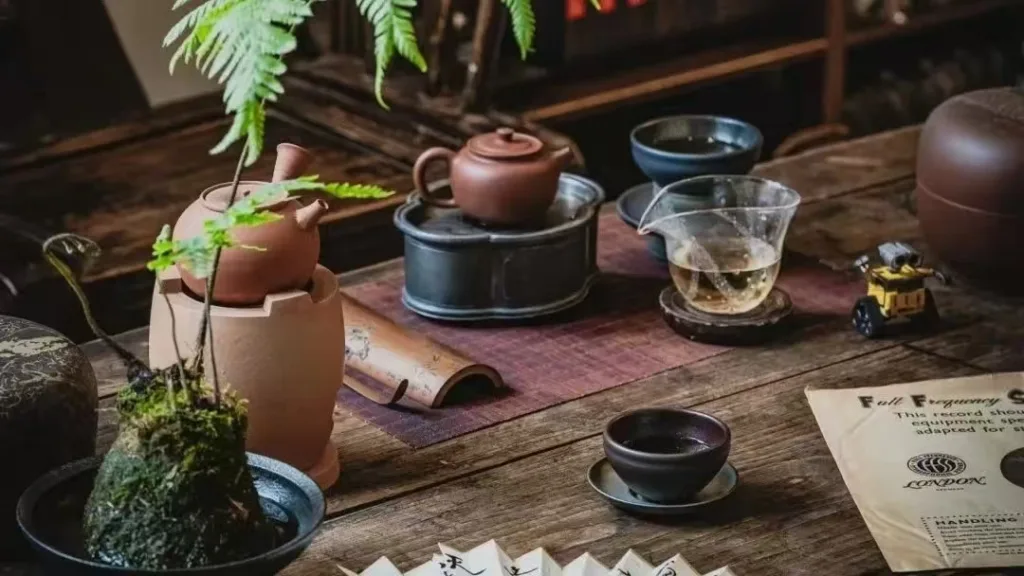
Choice of Utensils
As the saying goes: “Water is the mother of tea, and the teapot is the father of tea.” To enjoy a cup of fine fragrant tea, the tea, water, fire, and utensils must all be well-matched; none can be missing. This is because tea utensils are not only essential vessels for drinking tea with practical value, but they also help enhance the color, aroma, and taste of the tea. Furthermore, an elegant and exquisite set of tea utensils has its own aesthetic value and is rich in artistry.
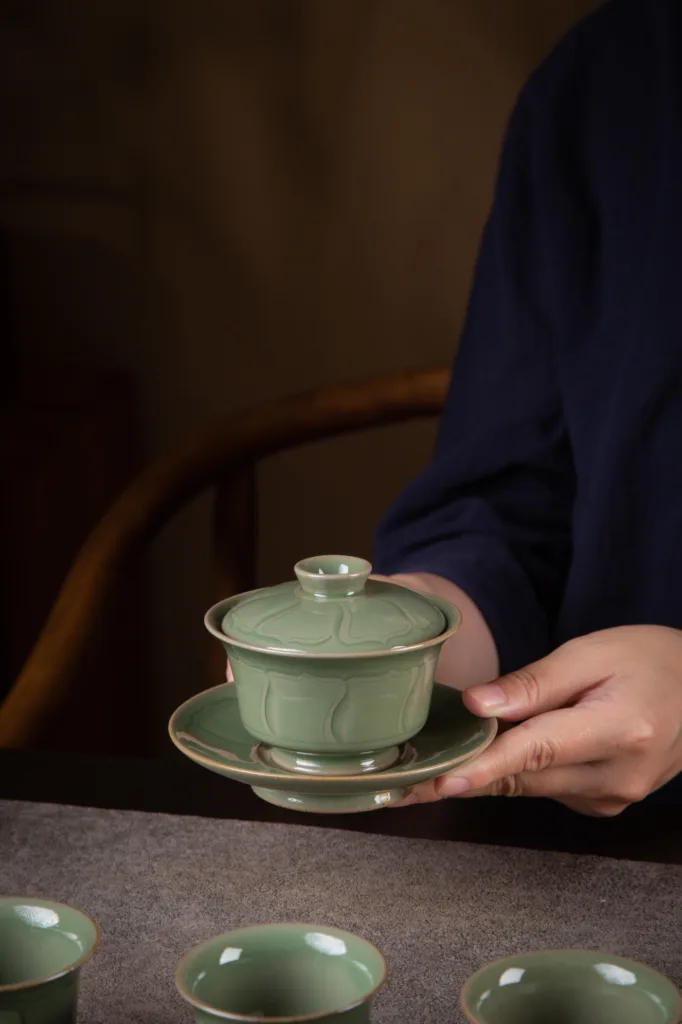
Comfortable Environment
Striving for excellent tea quality, pure water, proper brewing, and exquisite tea ware is the basic requirement for drinking tea. However, to elevate the experience of drinking tea from mere physical enjoyment to a form of spiritual and artistic enjoyment, the relationship between tea tasting and the surrounding environment becomes quite important. Clear mountains and beautiful waters, small bridges and pavilions, music, chess, calligraphy, and painting, as well as elegant secluded rooms, are, of course, ideal environments for enjoying tea.
The environment for tea tasting encompasses many aspects, usually consisting of gardens, buildings, and furnishings. For high-level tea gatherings, not only is careful attention to indoor arrangements required, but there is also an effort to make the rooms and buildings distinctive. If the surrounding natural scenery is beautiful, it becomes an ideal place for tea drinking. On the other hand, tea supply points located at ferry terminals, along main roads, or in fields and construction sites, aside from requiring cleanliness and hygiene, do not need much elaboration.
For home tea drinking, the environment is inherent and cannot be chosen freely, but within limited space, with some effort, it is still possible to create a suitable tea-drinking environment. For example, one can choose a spot near a sunlit window and arrange it with a tea table, sofa, and chairs. Keeping indoor items tidy, windows clean, and striving for a quiet, fresh, comfortable, and clean atmosphere can also make it a pleasant place for tea enjoyment.
China is the birthplace of tea, and tea culture is a treasure of China’s five-thousand-year history. Today, tea culture has become popular worldwide. This is not only because drinking tea has many health benefits, but also because tea tasting itself is an exquisitely elegant artistic experience. Integrating the wonders of tea culture and demonstrations of the tea ceremony offers a great opportunity to appreciate this refined art, while enjoying tea itself is also a wonderful pleasure!

Tea Evaluation
Tea evaluation refers to inspecting the tea leaves before brewing. Experts can immediately distinguish between different types such as green tea, black tea, herbal tea, oolong tea, yellow tea, white tea, and dark tea. More discerning individuals can even identify varieties like “Mingqian,” “Yuqian,” “Longjing,” and “Que She.” The temperature of the water, as well as the methods of steeping, rinsing, brewing, and boiling, vary depending on the type of tea.
Observing Tea
Observing tea involves examining the shape and color of the tea leaves. Once brewed, the shape of the tea leaves changes significantly, almost returning to their original natural state. This is especially true for famous teas, which are tender, and their buds and leaves unfold gracefully in the water, elegant and poised; some have plump buds that float and sink in the water, standing like a forest of flags and spears.
The color gradually develops with the movement of the tea leaves, transitioning from light to deep tones, forming green, yellow, red, and other colors depending on the type of tea. At this moment, observing the shape and appreciating the color of the tea is truly delightful.
Tea Tasting
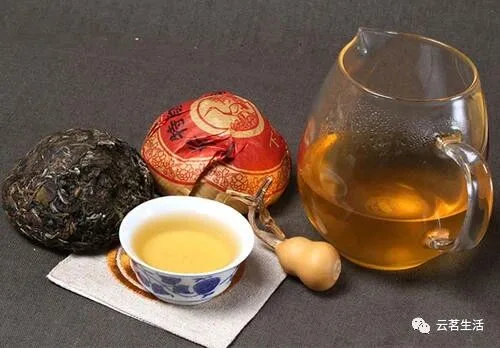
Tea tasting involves both savoring the taste of the tea and smelling its aroma. To smell the aroma, one first sniffs the dry tea leaves, which have not yet been brewed. Tea aromas can be categorized into sweet, roasted, fresh, and other types. Once the tea is brewed, its fragrance spreads from the water, at which point one can smell it. Tea utensils include more than 20 items such as teapots, fairness cups, tea trays, tea coasters, tea scoops, tea needles, tea spoons, tea tongs, tea strainers, filters, teapot care brushes, tasting cups, and aroma cups, with the aroma cup specifically used for smelling the tea. After smelling, hold the edge of the tasting cup with your thumb and forefinger, support the bottom with your middle finger, and sip the tea in three small sips. This is how one properly ‘tastes tea.’

Tea-Drinking Customs
China is the birthplace of tea, with a long history of tea cultivation, strict tea etiquette, and unique tea-drinking customs. Tea drinking in China dates back to the time of Shennong, over 4,700 years ago. Tea rituals have long been a practice. Offering tea to guests is one of the earliest traditional virtues and etiquettes of the Han Chinese, emphasizing hospitality and friendliness. Even in the 21st century, when guests visit, a pot of fragrant tea is always prepared. Tea and snacks are also commonly used to entertain guests during celebrations. Hosting a tea party is both convenient and economical, as well as elegant and solemn. The phrase ‘A gentleman’s friendship is as plain as water’ also refers to the clear and pleasant aroma of tea. The Han Chinese have various customs of using tea as a gift. In the Southern Song Dynasty capital of Hangzhou, during the beginning of summer, every household would brew new tea and pair it with various delicacies to give to relatives and neighbors, a tradition called the ‘Seven-House Tea.’ As part of this custom, two green fruits such as olives or kumquats would be placed in the tea cup to symbolize good fortune and blessings for the new spring.
Tea rituals are also an important part of traditional Chinese weddings. Xu Cishu of the Ming Dynasty wrote in “Cha Shu Kao Ben” that: ‘Tea does not change its origin, a planted seed always gives birth to seedlings.’ In ancient times, offering tea was a way to acknowledge a marriage because tea plants can only grow from seeds and cannot be transplanted, otherwise they would wither, making tea a symbol of unwavering loyalty. Therefore, in folk customs, tea is used as a betrothal gift. When a woman accepts the man’s betrothal gift, it is called ‘presenting tea’ or ‘tea confirmation,’ and some say ‘one family should not drink another family’s tea.’ The entire marriage ceremony is collectively referred to as the ‘Three Teas and Six Rites.’ The Three Teas include the tea given at the engagement, the tea during the wedding ceremony, and the tea when the couple first shares a room. The engagement tea is also called ‘men’s tea and women’s wine,’ meaning that during the engagement, the man’s family sends tea along with a wishing token, and the woman’s family returns a few jars of Shaoxing wine. During the wedding, there are three tea ceremonies. In the first step, fruits are served; in the second, lotus seeds and jujubes; finally comes the tea. The drinking method involves receiving the cup with both hands, bowing deeply, touching the lips with the cup, and then allowing it to be taken by family members. The second cup follows the same procedure. Only after bowing with the third cup can it be drunk. This is considered the most respectful form of etiquette. These elaborate customs, including the tea rituals of weddings, continue to be practiced. Zhang Yuan in “Cha Lu” states in the section on “Tang Bian”: ‘There are three major distinctions and fifteen finer distinctions for tea soup: first, distinguishing by appearance; second, by sound; third, by aroma.’
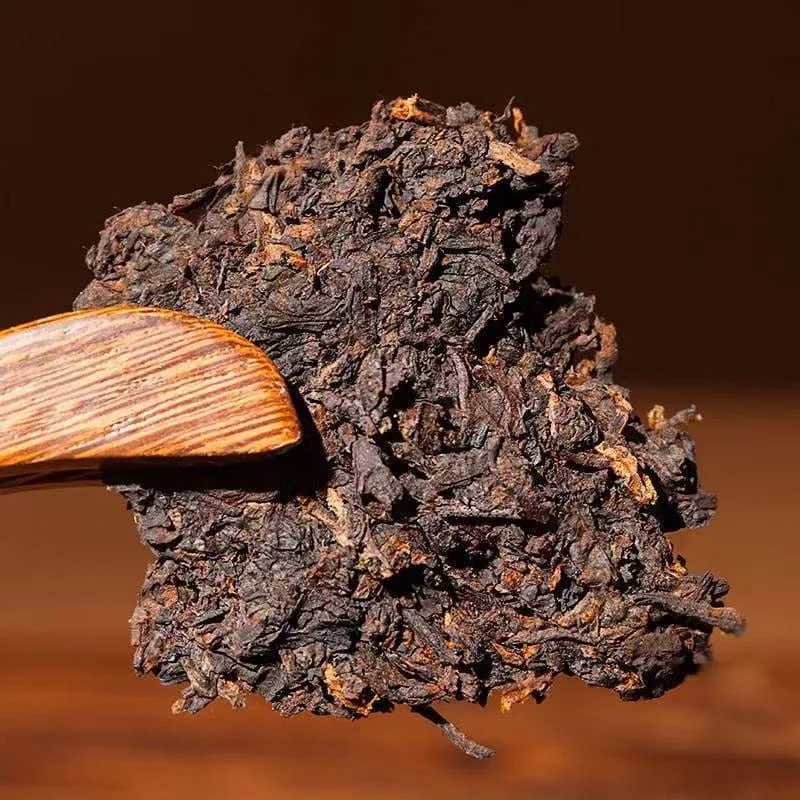
AYM Pu’er
Black Tea Puerh Tea is harvested directly from the source, supplied directly fro the tea plant to Europe, simple, easy to store and easier to brew.Coffee lovers will love YM’s tea!
The introduction is very detailed. When you go back, you should try the cup you bought here last time, which is very similar to this one